Get Full Government Meeting Transcripts, Videos, & Alerts Forever!
Get email alerts on the Municipal Finance topic
No spam. Unsubscribe anytime.
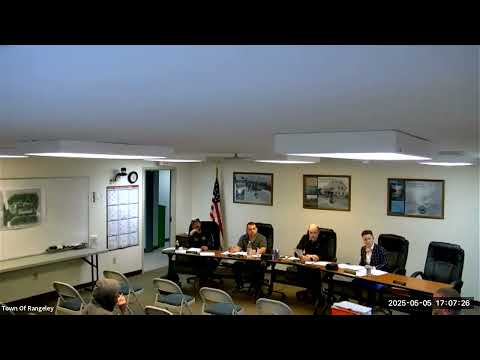
Selectboard hears questions about overdraft language, grant-match funding during final warrant hearing
Summary
At a final public hearing on the town meeting warrant, residents asked the Selectboard to clarify what constitutes an overdraft and whether the town should create a dedicated matching-grant reserve; board and staff said there is no formal overdraft policy and that matching funds are typically covered from earmarks or existing reserve accounts.
A Rangeley resident asked the Selectboard at a final public hearing that the town define “overdraft” and set a clear threshold so taxpayers understand when the town will close an overdraft to fund balance.
The resident raised the question while the board reviewed a warrant article that would close fiscal-year overdrafts to fund balance. Joe (town manager/chair) responded that “an overdraft, what I understand is any amount that's over what was approved, for an expenditure from the previous company. So it could be a dollar. It could be a hundred dollars.”
The question went to the heart of whether voters expect a de minimis numerical threshold or percentage. The resident said other municipalities sometimes use a percentage (one commenter referenced “up to 2%”) or a fixed dollar cap such as $10,000; board members and staff said Rangeley has not historically adopted a fixed overdraft threshold.
Why it matters: residents said a clearer definition would help taxpayers understand whether the warrant language allows routine transfers of significant sums to fund balance without further public discussion.
Board and staff described how the town handles unexpected costs. Joe and other board members noted emergencies — for example, a sudden sewer-main failure — can require closing an overrun before year-end. Joe said the town had recently encountered a unique, relatively large overdraft that prompted the public meeting that led to the current discussion.
On related finance policy, a resident asked how the town covers required matching funds for grants. Town staff said there is no single “matching fund” policy; rather, the town typically earmarks funds when a grant is anticipated or uses existing reserve accounts. Joe noted examples: downtown revitalization and economic development reserves, and the highway reserve have been used in the past for match requirements. He also said some grant matches have been handled by taking from specific reserve accounts when appropriate.
Board members discussed whether to create a standing matching-grant reserve. Staff cautioned there are legal and accounting constraints on converting undesignated fund balance into purpose-specific reserves without following statutory or budgetary steps. One board member said creating a modest dedicated match reserve — described by a speaker as potentially a “$200,000 matching fund pocket” in other towns — could prevent missed opportunities, while others warned about limits on accessing those funds and the need to specify allowable uses.
All speakers indicated this was a discussion of process and future language for warrant articles; no formal policy change was adopted at the meeting.
Ending: Board members suggested the topic be considered further and possibly refined before future warrant votes so voters and staff have a shared understanding of overdraft limits and grant-match procedures.