
State housing laws require Clallam County to expand allowable housing types, Commerce official says
Get AI-powered insights, summaries, and transcripts
Subscribe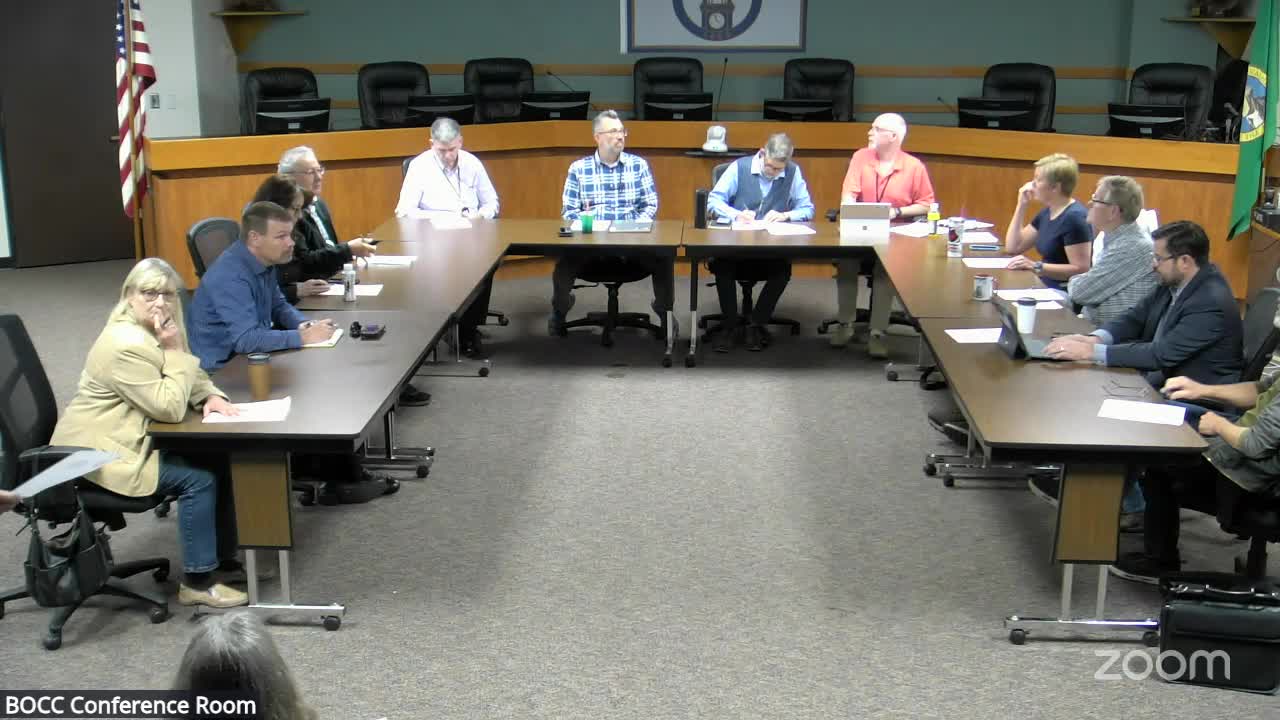
Summary
Anne Fritzl of the Washington State Department of Commerce told a Clallam County housing committee that new state laws and deadlines require counties to increase land capacity, allow two ADUs per lot in urban growth areas and add policies for middle housing, while offering state tools and grants to help local implementation.
Anne Fritzl, housing section manager for the Washington State Department of Commerce, told the Clallam County Housing Solutions Committee on May 2 that recent state legislation and planning deadlines require local code changes and new planning work to accommodate expected housing needs.
"We need 1,100,000 units over the next 20 years," Fritzl said, describing the state's projections and the factors Commerce used (OFM population projections, vacancy rate targets and exclusion of second homes and group quarters) to estimate statewide need.
Fritzl said the county must update its housing element by the statutory deadline and demonstrate adequate land capacity and adequate production provisions: "Your responsibility is sure there's enough zoning and incentives in place to allow the housing to occur," she said. She listed several specific requirements and new laws that counties must address, including allowing two accessory dwelling units (ADUs) per lot in urban growth areas, policies for middle housing, limits on parking near transit, and requirements to allow shelters, transitional housing, emergency housing and permanent supportive housing (the "STEP" categories).
The presentation explained how ADU rules have changed: owner-occupancy requirements can no longer be imposed in urban growth areas, ADUs must be allowed up to a roughly 1,000-square-foot size limit, separate sale of ADUs must be permitted in some circumstances, and local governments must consider proportional impact fees so smaller units pay smaller fees. Fritzl said local governments may exclude ADUs from the rules in critical areas, shoreline zones or where covenants prohibit them.
On middle housing, Fritzl said all communities must adopt policies supporting it, though smaller jurisdictions are not required to permit all types. She reviewed a pro forma analysis (based on Seattle-region data) showing a single-family sale price could cover two separately sold duplex units in some markets and that fourplexes can lower per-unit purchase prices compared with single-family homes. Fritzl noted Commerce is updating that pro forma for statewide use by June.
Fritzl described STEP and conversion rules: jurisdictions cannot prohibit shelters and transitional housing, reasonable occupancy and spacing requirements for public safety are allowed, and conversion of existing commercial or mixed-use buildings to residential uses with increased density must be permitted where feasible. She also highlighted clear-objective design standards (standards must be measurable so applicants and reviewers know whether proposals comply) and a range of state tools and grants, including the Connecting Housing to Infrastructure Program (CHIP) and multifamily tax exemption information available on Commerce's website.
Committee members pressed on rural applicability and pro forma relevance. Committee member Rod asked whether Commerce would develop pro formas tailored to rural communities; Fritzl said the agency is working on statewide updates and would coordinate with the committee and the consultant to provide more regionally relevant data in June. Fritzl also clarified that the state's housing numbers focus on supply-side projections and do not model local job or wage growth.
Fritzl named several statutory and regulatory threads the committee should expect to address in code updates, and said Commerce staff can help with tools and workshops: "I will work with Timothy to set something up," she said in response to requests for follow-up on financing and loan models.
Why it matters: the county must adopt multiple code and policy changes to meet state deadlines, and the updates can affect zoning, permitting timelines, parking rules, allowable unit types and local incentives used to attract private development.
The committee did not take a formal vote on any code changes during the meeting; the presentation was an informational briefing and Commerce offered follow-up technical assistance and materials for the committee's planning process.