Get Full Government Meeting Transcripts, Videos, & Alerts Forever!
Get email alerts on the Feral Cats topic
No spam. Unsubscribe anytime.
Feral cat program, TNR funding and rehoming plans discussed as shelter looks to cut cat euthanasias
Summary
Feral Cat Rescue and shelter staff described trap-neuter-return (TNR) partnerships, a Maryland Department of Agriculture grant targeted by ZIP code, and plans to create outdoor placement options to reduce euthanasia tied to unsocialized cats.
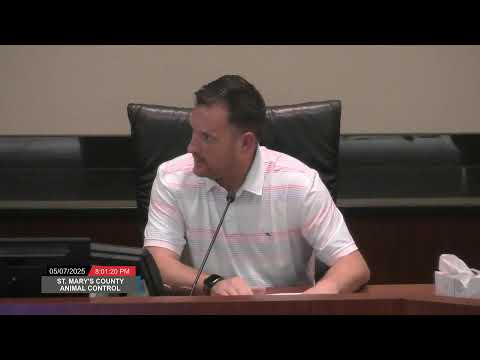
Feral Cat Rescue representative Diane Harris told the Animal Control Advisory Board May 7 that the Maryland Department of Agriculture awarded a $24,000 grant to support spay-and-neuter of feral cats in certain St. Mary's County ZIP codes and that the state expects to see a decline in cat euthanasia tied to the funding. "The Maryland Department of Agriculture wants to see a decrease, and we had an increase," Harris said, and added concern for future grant eligibility as 2026 applications require past statistics.
Why it matters: shelter staff reported that 11 of 19 cat euthanasias during the reporting period were feral or unsocialized, and both staff and Feral Cat Rescue emphasized that TNR plus rehoming/placement should be expanded to reduce those numbers.
Harris described local and regional practices and possible placement models she observed in neighboring Calvert County, where shelters keep feral-working cats in dedicated rooms, free-roaming enclosures and outdoor placement lists. She said volunteers and rescue groups could supply the outdoor placements but emphasized a public campaign would be needed to develop new caretakers: "We really need to have a big campaign to have people lined up who are willing to take these cats," Harris told the board.
Lampe said the shelter currently offers a limited in‑house response for feral cats at intake: staff give a distemper-combo vaccine when safe (cost approximately $7.12 per dose, Lampe said) and rely on partner groups for spay/neuter costs. Harris, Lampe and other board members outlined the elements the program requires: trap rental or owner-trapping, spay/neuter and rabies vaccination (Harris said the grant covers spay/neuter and rabies), post-surgical care, and identification of outdoor homes or barn-home placements for rehoming.
Board members discussed practical steps: increasing volunteer support for trapping and transport at community TNR events; expanding outreach so property owners can request TNR rather than removal-only responses; and using adoptable-but-feral shelter space designed for viewing and selection by prospective caretakers. Harris said partnerships and targeted public education are critical because volunteers’ personal networks are tapped out; she urged the board to help lead a community outreach campaign.
Ending: The board agreed to include feral cat rehoming, a public awareness uptick and coordination with Feral Cat Rescue among its goals for the next year, and asked staff and volunteers to return cost estimates and potential program designs.