Get Full Government Meeting Transcripts, Videos, & Alerts Forever!
Get email alerts on the Public Health Budgeting topic
No spam. Unsubscribe anytime.
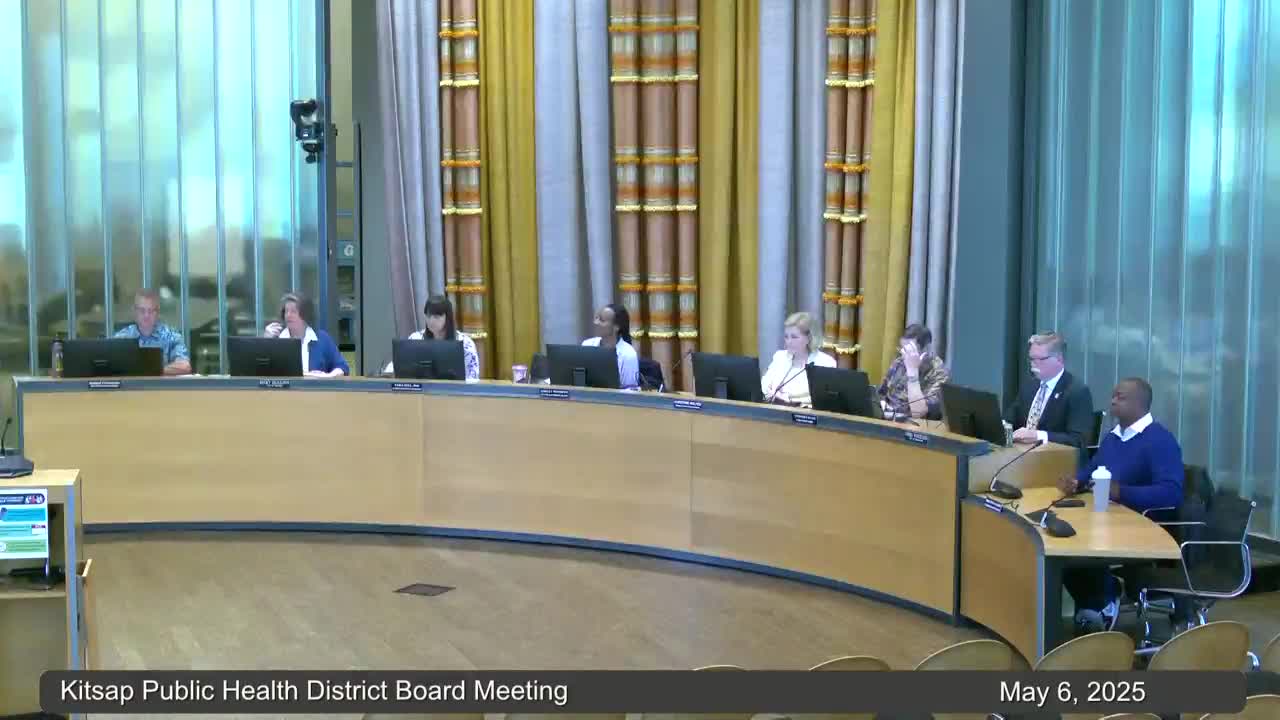
Kitsap public health officials warn of state funding cuts while highlighting local clinic and workforce gains
Summary
Yolanda Fong, administrator for the Kitsap Public Health District, said the district has temporarily restarted some vaccine clinics after pandemic-related grants were made accessible again, but warned the governor’s proposed budget reduces statewide foundational public health services funding by $24,000,000 for the upcoming biennium.
Yolanda Fong, administrator for the Kitsap Public Health District, told the Board of Health that the district had been able to reinstate some vaccine clinics after the Centers for Disease Control temporarily restored access to pandemic-related grants amid legal challenges.
The district faces an uncertain budget outlook: Fong said the governor’s current budget would reduce statewide foundational public health services (FPHS) funding by $24,000,000 for the upcoming biennium. She added that FPHS makes about 22% of the health district’s 2025 revenue.
The reduction matters because FPHS underwrites core communicable-disease surveillance, immunization, and environmental health services that the district provides. Fong also flagged local workforce and partnership efforts that could partially mitigate service gaps, including staff presentations at the Washington State Environmental Health Association conference and leadership roles for local staff in statewide forums.
Gidmaro, the district health officer, framed recent state and federal changes as mixed news: new state laws will allow public-health officials to continue using “safe and proven methods like vaccines,” and other legislation has modernized child fatality review and expanded Medicaid access, he said. He emphasized ongoing, multiagency efforts cited in the Johns Hopkins analysis of regional health-system needs and pointed to concrete local projects in progress: MultiCare’s new Bremerton emergency facility, Peninsula Community Health Services’ medical respite project, and the Allied Health Center at Olympic College.
Asked about the potential for healthcare profits to be reinvested locally, Gidmaro criticized current compensation levels at some systems and urged more transparency and reinvestment of local health dollars, citing the region’s high per-person healthcare costs as a policy concern.
Board members and mayors repeatedly praised recent partnership work that has led to new facilities and training programs. Mayor Becky Erickson, who serves on recovery- and workforce-focused committees, thanked staff and partners for moving the Allied Health Center forward and called the combined efforts a key part of improving local primary care capacity.
No formal policy action or vote was taken on the budget issues at the meeting; the board heard the reports and asked district staff to continue monitoring impacts and coordinating with county and state partners.