Get Full Government Meeting Transcripts, Videos, & Alerts Forever!
Get email alerts on the Building Division Staffing topic
No spam. Unsubscribe anytime.
St. Louis building division warns staffing shortfalls, rising demo and short‑term‑rental workloads
Summary
Building Commissioner Ed Ware told the Board of Aldermen’s Budget & Public Employees Committee that the Building Division is understaffed, has growing demolition and security costs, and is preparing for regulation of thousands of short‑term rentals while rebuilding plan review capacity.
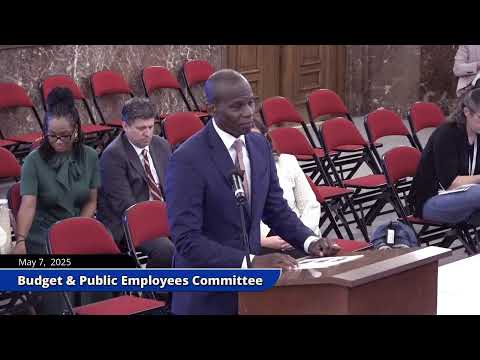
The City of St. Louis Building Division told the Board of Aldermen’s Budget and Public Employees Committee on May 7 that it is operating below requested staffing levels while shouldering new duties including a short‑term rental program temporarily restrained by a court.
The division’s leader, Building Commissioner Ed Ware, outlined the department’s responsibilities and staffing shortfalls. “My name is Ed Ware. I’m the building commissioner for the city of St. Louis,” Ware said, and then described a department of about “170 active employees” spread across 14–15 sections including inspections, trades, plan exam, permitting, zoning, a short‑term rental unit and demolition work.
The lack of staff contributed to a plan‑review backlog that Ware said he inherited and is rebuilding: the plan exam section had fallen to a single examiner before recent hires, and Ware said he has rehired a chief plan examiner and is interviewing candidates to restore the prior staff level. Deputy Commissioner Dylan Mosier said the division requested a recruitment pay adjustment for senior plan examiners “to bump that up to just under 65,000,” but that request was denied during the budget process.
Why it matters: inadequate plan review and inspector staffing slows projects for builders and residents, and increases pressure on other city services. Commissioners and aldermen repeatedly raised concerns about board‑ups, demolition priorities and the division’s ability to respond quickly to unsafe structures.
Key figures and programs - Staff and units: Ware said roughly 170 active employees cover inspections, trades, plan exam, permitting, zoning, healthy homes, fire safety, demolition and other sections. He described 4 field managers overseeing inspectors, a fire safety unit with one supervisor and five inspectors, and declining capacity in certain trade inspector categories. - Vacancies and losses: Ware said the division lost a number of inspectors over the past year to retirement, death and other jobs; he named recent hires and said turnover is driven in part by higher private‑sector pay. - Plan exam: Ware said the section had been “devastated” and is in a rebuilding phase; he named Tim Claus as chief plan examiner and said additional hires — including a civil engineer — were imminent. - Short‑term rentals: Ware and Mosier said the division must regulate short‑term rentals; Ware cited industry feedback estimating “as many as 2,000 unlicensed Airbnbs” in St. Louis. The division is waiting for guidance after a judge issued a temporary restraining order that has paused enforcement. Mosier said the division and county have discussed digital plan‑review systems such as Accela to speed reviews. - Board‑ups and demolition: the division’s board‑up crew and demolition unit are handling more work. Ware said board‑up staffing requests were cut in the budget (a requested nine utility/board‑up slots were reduced to four) and quoted Arnold Mitchell in the board‑up section saying the crew needs at least five workers to operate safely. Ware described an emergency security contract at the Railway Exchange that previously cost the division roughly $65,000 per month and said the FY26 budget includes $744,000 under an 11/21 security line as a contingency for similar needs. - Vacant Building Initiative funds: Ware and Deputy Budget Director Jim Benoist said new legislation changed fee allocations for vacant‑building enforcement; the division has a special fund line (C6216) funded with $145,000 for a Vacant Building Initiative II. Benoist described the split revenue model established by the ordinance: a share goes to community development grants and a share to program maintenance.
Discussion and outstanding items Committee members pressed the division on steps to reduce permit backlogs, the feasibility of a 60‑day timeline for conditional‑use hearings (Mosier noted minimum statutory public‑notice timing of roughly 15 days and capacity constraints that make 60 days difficult), and whether the short‑term rental roll‑out should be delayed to avoid mass delisting by third‑party platforms. Ware said he and Mosier were actively trying to locate funding for four inspectors and one supervisor the division had expected to be funded from account 12‑10 for a Prop NS contract with the Land Reutilization Authority (LRA); the positions were removed during budget review and Ware said he was tracking the account to reconcile the contractual obligations.
What the committee directed or decided - Budget staff confirmed a special vacant‑building fund was created and funded per recent ordinance language; Benoist said the fund split and cost centers were added so revenues and expenditures could be tracked separately. - No formal vote on new legislation happened in the committee; the committee discussed funding priorities and asked the division for follow‑up information on the 12‑10 account and plan‑review staffing.
Bottom line: Committee members signaled support for adding inspectors and board‑up capacity but also urged the division to supply clearer account and staffing reconciliation. The division said it will continue hiring where possible, pursue digital plan review, and work with the mayor’s office and budget staff to clarify Prop NS funding and the newly created vacant‑building fund.
Ending: Commissioners and aldermen said they will continue budget follow‑up with the Building Division and the budget office to reconcile the missing Prop NS slots and assess whether additional pay or reclassification would improve recruitment and retention.