Get Full Government Meeting Transcripts, Videos, & Alerts Forever!
Get email alerts on the Rapidan Dam Fema topic
No spam. Unsubscribe anytime.
Blue Earth County declines to escalate FEMA appeal after Rapidan Dam stabilization denial
Summary
County engineers reported FEMA denied emergency funding to stabilize the west escarpment at Rapidan Dam; commissioners said the likelihood of a successful appeal was low and declined to pursue costly technical and legal appeals, while continuing longer-term design and demolition work with consultants.
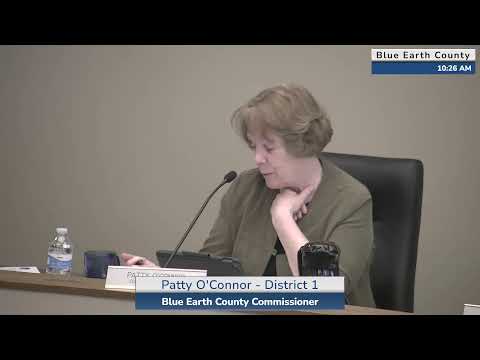
Blue Earth County officials told the Board of Commissioners on May 6 that the Federal Emergency Management Agency denied the county’s request for emergency funds to stabilize the west escarpment at Rapidan Dam, and commissioners directed staff not to pursue an extensive appeal.
County project staff and consultants have been studying river hydraulics, bridge-span alternatives and dam removal options after the 2024 incident that damaged the site. Engineers provided a technical memorandum to FEMA asking for emergency slope stabilization funding; FEMA’s response denied the request for immediate stabilization funding and noted that lower-cost measures (for example, fencing) had already been used to address immediate public-safety concerns.
“We requested emergency slope stabilization funding and FEMA has denied the county request for funds to stabilize the West Escarpment,” public works staff member Ryan said during the meeting. He told commissioners the county had 60 days from FEMA’s memorandum to file an appeal; the appeal deadline falls on June 16, 2025. The county’s requested emergency stabilization figure in the earlier analysis was about $8.423 million.
Nut graf: The denial leaves the county to choose between using local resources or continuing design and permanent-work funding requests under standard public assistance channels. Commissioners said the technical and legal work required to challenge FEMA’s decision would be costly, likely time-consuming and unlikely to succeed given FEMA’s emphasis on least-cost emergency options and the fact the county already installed fencing.
County staff and outside engineers reported ongoing technical work: hydrologic modeling by Barr showed high velocities and scour “hot spots,” and consultants are evaluating alternatives such as lengthening the bridge center span to reduce in-river pier exposure. Soil borings and demolition work have been delayed while contractors remove rubble from the river; staff said final damage-quantity information recently arrived and is being reviewed by consultants.
Several board members said they were reluctant to devote additional county staff time and money to a time-consuming appeal process that may not change FEMA’s determination. One commissioner summarized the sentiment, asking whether continuing to challenge FEMA “would slow us down another year,” and the board indicated that staff should not expend significant county resources on an appeal at this time. Instead, staff will continue technical design work for long-term solutions — including potential dam removal and river-channel measures — and will return to the board with updates.
Context and next steps: County staff said Barr and TKDA are preparing design alternatives and cost estimates for long-term work, and that some FEMA-eligible items may still be reimbursed under standard Public Assistance processes as the project proceeds. The board asked staff to preserve documentation and proceed with technical analyses while conserving county staffing and consultant budgets for activities likely to produce recoverable outcomes.
Ending: The board’s direction leaves the immediate stabilization decision to future budget discussions and technical design choices; staff said they would update commissioners on any new FEMA correspondence or changes to the technical recommendations.