Get Full Government Meeting Transcripts, Videos, & Alerts Forever!
Get email alerts on the Student Voice topic
No spam. Unsubscribe anytime.
SCCPSS student senators say district is acting on student input, push dress-code option over uniforms
Summary
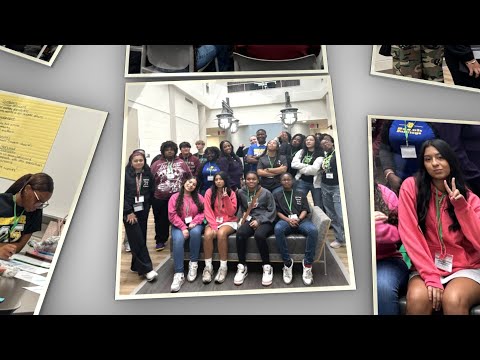
Representatives of the Savannah-Chatham County Public School System 2024–25 student senate told district leaders their meetings are producing changes, cited student input used in a recent uniform-policy update and said they favor a dress code alternative to mandatory uniforms.
Members of the Savannah-Chatham County Public School System (SCCPSS) 2024–25 student senate told district leaders that their student-led meetings have led to concrete changes and that students should have more say in the district dress-code policy.
"Student center is a place for us to express our opinions about different topics," one student senator said, adding that "we feel like our voices are being heard instead of we're just meeting and, like, nothing is being done." The senators said small accomplishments from their meetings are yielding changes at the district level.
A student senator recounted that "at our last board meeting, our school leaders presented updates to the uniform policy. And in that policy, Dr. Barnes explicitly stated that this was developed with input from student senate." Another student said a staff member, Miss Nunziata, told the senate that some short-term solutions the students suggested were being enforced.
Several student senators said they are advocating for a dress-code approach rather than mandatory uniforms. "We're pushing for a more dress code instead of uniform for the comfortability of students going to school. We feel as if a dress code would make students wanna come to school more, and it will raise the attendance rate in schools," one senator said (claim presented as the student's view).
Senators also described leadership benefits from participating in the senate. "The big takeaway students have had is that leadership is not just who you are as a leader, but how you collaborate as a leader," a student senator said. They said the program teaches consensus-building, persuasion and how to influence decision-makers.
Ken Slantz, speaking for the 2024–25 student senate, closed the remarks by saying the experience has made students feel their voices matter: "That your voice does matter. And that's the case for the 20 24 25 student senate. For SCCPSS, I'm Ken Slantz." The remarks were presented as student testimony and description of the student senate's recent work; no formal board action or vote was recorded in the transcript.
The students identified two practical outcomes: (1) district leaders acknowledged student input was used in a recent uniform-policy update and (2) some short-term suggestions reported by students were being put into practice by staff. The students framed the dress-code proposal as a potential attendance and comfort measure; the transcript records this as a student argument, not as a measured or district-reported result.
District references in the remarks included Dr. Barnes and Miss Nunziata as district staff mentioned by the students. The student senators discussed the role of the student center and the senate in channeling student feedback to SCCPSS leadership. No statutory citations, motions, votes or formal directives appear in the provided remarks.