Get Full Government Meeting Transcripts, Videos, & Alerts Forever!
Get email alerts on the Early Childhood Suspension Expulsion topic
No spam. Unsubscribe anytime.
Oregon outlines Every Child Belongs program to curb early‑childhood suspensions and expulsions
Summary
The Department of Early Learning and Care described Every Child Belongs, a statewide prevention program that centralizes supports, adds mental‑health consultation and data tracking, and seeks to reduce exclusionary discipline in early childhood settings ahead of a July 2026 prohibition on suspension and expulsion.
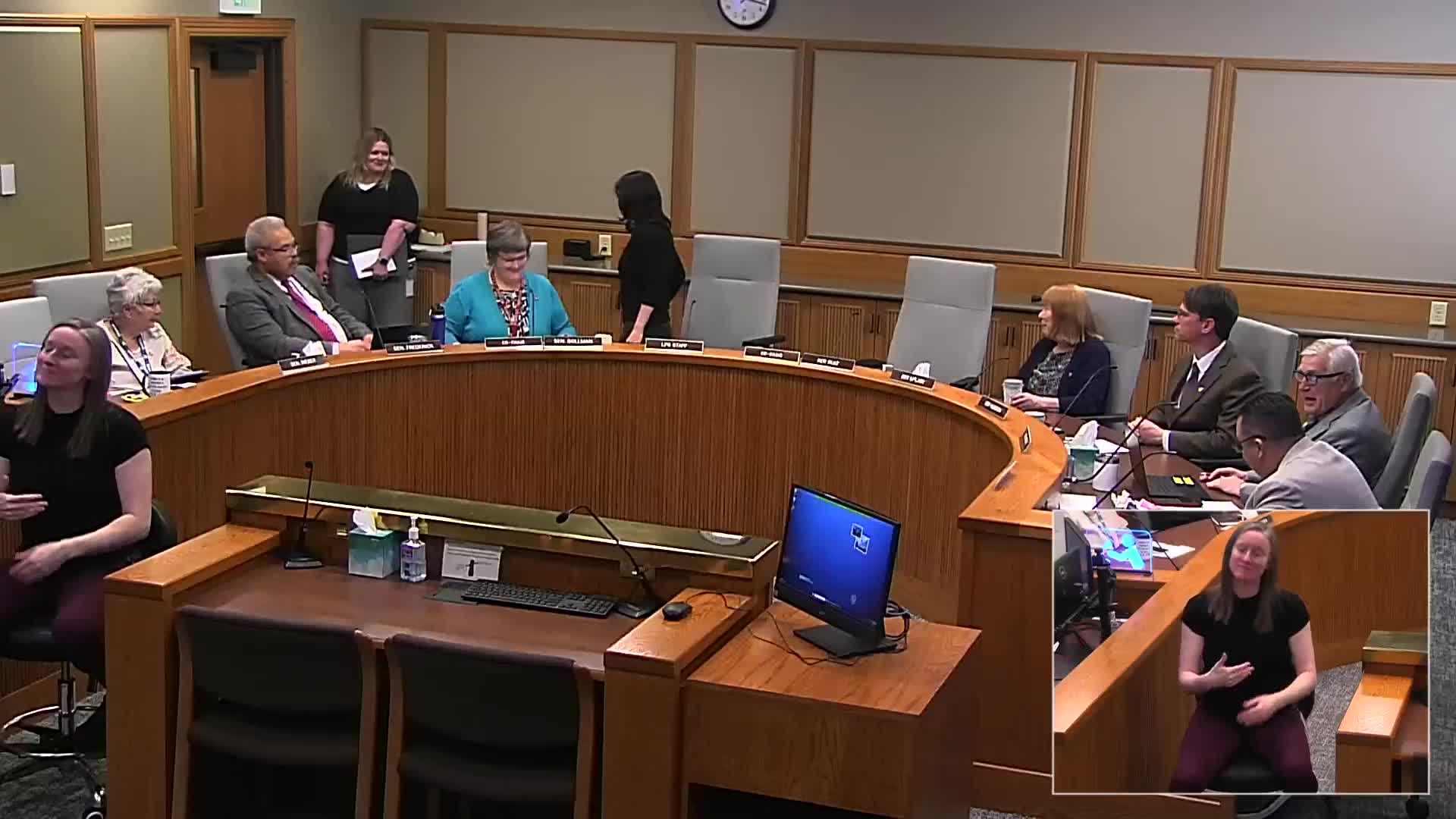
The Department of Early Learning and Care (DELC) presented the Every Child Belongs prevention program in an informational committee meeting, describing plans to centralize support, expand regional infant and early‑childhood mental health consultation, and build data systems to track services and retention.
DELC Director Alyssa Chatterjee told the committee the program — created following legislation that established early‑childhood suspension and expulsion prevention — is intended to end exclusionary discipline in early‑learning settings and provide coordinated supports for providers and families. She said the department has used about $8.4 million in general fund to stand up the program to date and identified a continuing need for regional capacity and data systems.
Why it matters: DELC staff said an estimated 9% of children in care — roughly 15,460 children in Oregon’s estimate — experience suspension or expulsion at some point in early childhood. Staff cited national research (Dr. Walter Gilliam) showing preschool‑age suspension and expulsion rates exceed those in K–12 and described disproportionate impacts on boys and children of color. DELC said exclusionary practices interrupt early social‑emotional development and can have long‑term negative consequences.
Program components and implementation: DELC outlined three core components: Every Child Belongs Connect (a single point of contact/helpline for early‑education professionals to request rapid assistance), a suite of training/coaching/technical assistance delivered through the childcare resource and referral network and local partners, and a data‑tracking system to record requests and services. DELC said it has contracted regional providers (a mix of education service districts, child‑care resource and referral organizations, early‑learning hubs and relief nurseries) to deliver infant and early‑childhood mental health consultation and that pilot regions will begin services in June–July and phase statewide ahead of a July 2026 prohibition on suspension and expulsion established in law.
DELC described expected capacity targets and constraints: the department estimated an initial year of roughly 600–1,100 requests statewide (not all requiring a mental‑health consultant), aims to place at least two full‑time equivalent mental‑health consultants in most of its 15 childcare resource regions (with Harney and Grant counties as exceptions), and noted an ideal caseload of about 17 programs per infant/early‑childhood mental‑health consultant. DELC said it plans to add 22 infant/early‑childhood mental‑health consultants statewide as part of the rollout and to build inclusion specialists into each childcare‑resource organization.
Budget and coordination: DELC said the governor’s recommended budget includes an additional $4.35 million beyond the existing $8.4 million in the agency budget. Staff emphasized the program requires coordination with the Oregon Health Authority and the Oregon Department of Education to ensure families needing behavioral‑health services can be referred and served. DELC also said it will start rulemaking for program participation in the fall and would collect implementation and usage data during the first biennium to inform growth needs.
Quote: “Suspension and expulsion is never an intervention... It is purely a punishment,” DELC Director Alyssa Chatterjee said, describing the rationale for building prevention and family‑and‑provider supports.
Questions and concerns from legislators focused on workforce capacity, rural delivery, data collection, timelines and whether there are sufficient behavioral‑health providers to meet referrals. DELC acknowledged national and state shortages and said the program will surface demand data and aim to coordinate referrals with partner agencies.
Next steps: DELC will pilot regional mental‑health consultation and Every Child Belongs Connect in early adopter regions beginning in summer, continue phased statewide implementation through calendar year rollout and begin fall rulemaking to align with statutory requirements before the July 2026 prohibition on suspension and expulsion.