Get Full Government Meeting Transcripts, Videos, & Alerts Forever!
Get email alerts on the Sales Tax Referendum topic
No spam. Unsubscribe anytime.
2019 sales‑tax referendum fund shrinking to $7.5M projection; council told flexibility is limited
Summary
Finance officials told the Budget Committee that the sales‑tax referendum fund established in 2019 is dwindling and projected to end FY26 with roughly $7.5 million because recent salary recoveries and one‑time project costs have outpaced receipts.
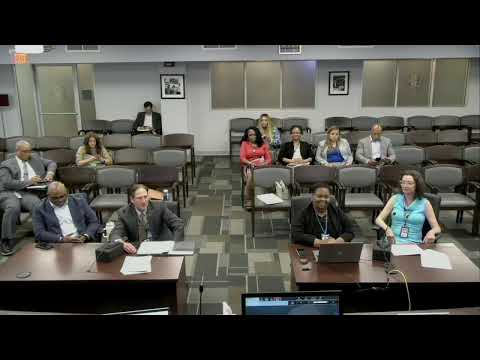
Walter Person, the city’s chief financial officer, gave a detailed review of the 2019 sales‑tax referendum fund and told the Budget Committee that the fund’s balance has fallen as salary recoveries and one‑time project costs have exceeded receipts. The referendum, passed in 2019, established a one‑half‑percent sales‑tax increase whose proceeds are restricted for restoring and maintaining health benefits for public safety employees, restoring pension benefits and, after those needs, for street maintenance and pre‑kindergarten education. Person said, “The referendum calls that all funds must be spent for the purposes designated above.”
Person showed historical receipts that surged during the COVID years (FY20–FY23), driven by temporary federal and pandemic-related spending, then reversed as federal sources expired and salary recoveries grew. He said expenses from the recovery of a 9% portion of a larger public-safety salary package and several one‑time projects pushed FY23 and FY24 expenses above receipts. Person summarized projections showing an ending fund balance of about $26.2 million for FY25 and a projected balance of roughly $7.5 million for FY26 under the proposed budget.
Council members asked about the fund’s flexibility. Councilwoman Easter Thomas asked whether the referendum fund could be reallocated from street maintenance to pre‑K and what tradeoffs would arise. Person said reallocating within the referendum’s allowed uses is possible but that moving money from the referendum to another purpose effectively shifts the cost back to the general fund; he framed such moves as a zero‑sum choice unless the council opts to cut services in the general fund to cover the reallocation. “It’s a 0 sum game,” he said, explaining that any reallocation would require general‑fund offsets or cuts in existing services.
The council also discussed that the referendum fund’s ongoing shortfall is in part structural: recurring salary and benefit recoveries that were charged to the fund continue to exceed its current revenue stream. That dynamic, plus one‑time transfers and project costs in recent years, constrains the committee’s ability to use the fund for new initiatives without identifying offsets.
Ending: Finance recommended prudence: maintain the referendum fund’s statutory uses, monitor recurring recovery obligations that have consumed the fund, and present the council with any proposed reallocations only after identifying compensating general‑fund reductions or other revenue sources. Council members asked finance to provide clearer line‑item history of recent uses of the fund to show constituents where recent referendum proceeds were spent.