Get Full Government Meeting Transcripts, Videos, & Alerts Forever!
Get email alerts on the Education And Public Health topic
No spam. Unsubscribe anytime.
University of Memphis dean outlines high‑school public‑health programs, research gains to council committee
Summary
Dean of the University of Memphis School of Public Health told a City Council committee the new school is expanding dual‑enrollment and high‑school clubs, growing research funding and community partnerships; council members offered support and asked for impact metrics.
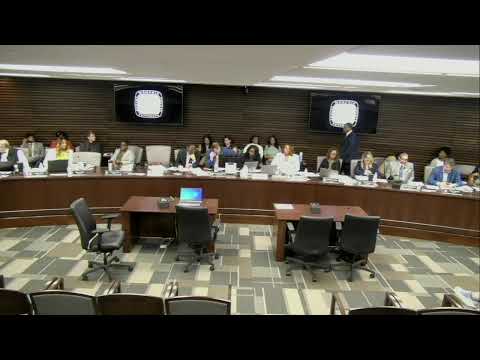
The University of Memphis School of Public Health presented its new programs and community partnerships to the Public Service, Arts and Youth Initiative Committee on May 6, outlining dual‑enrollment high‑school courses, public‑health clubs and expanded research activity.
The presentation matter-of-factly described new K‑12 pathways and local partnerships that school leaders say aim to expand public‑health knowledge and workforce pipelines across Memphis.
Dean Joshi, who led the briefing, told the committee the school has prioritized early engagement with students. “We are the first school of public health…that has established public‑health dual enrollment in high schools,” Joshi said. He added the school has helped start public‑health clubs at several high schools and has run student hackathons addressing local health problems.
Nut Graf: The committee heard that the fledgling school intends to use curriculum, clubs and community partnerships to broaden interest in public‑health careers and to support local prevention efforts. Council members asked for measurable evidence of community impact and for cooperation with county health partners to align student programs with local needs.
In his remarks Joshi described program highlights: dual‑enrollment public‑health classes in multiple high schools; public‑health clubs active in Cordova, Southwind, Kingsbury and the Medical District; a recent hackathon involving 16 teams and 89 students from four continents; and what he said was roughly 400% growth in the school’s externally funded research portfolio since he arrived. He also cited an award recognizing the school’s community work.
Council members praised the outreach and asked for follow‑up data. Councilwoman Logan asked Joshi to clarify the difference between clinical care and public health; Joshi replied that “health care is very much hospital‑centric…public health is to focus on prevention, health promotion, and not to make [people] get sick.” Several members asked that the university provide clear, short metrics that the council could share with constituents.
The school’s staff said they are working with the Shelby County Health Department and other local partners and that the council would receive a formal recognition resolution and a small gift from councilmembers later in the day. Committee members requested a brief one‑page summary of the specific data the council should expect to receive — for example, the number of students enrolled in dual‑enrollment courses, locations of clubs, and demonstrable community outcomes — and asked staff to return with those metrics.
Ending: The committee did not take formal action; members expressed unanimous support in principle and asked university staff to provide a short impact summary for council distribution and future meetings.