Lifetime Citizen Portal Access — AI Briefings, Alerts & Unlimited Follows
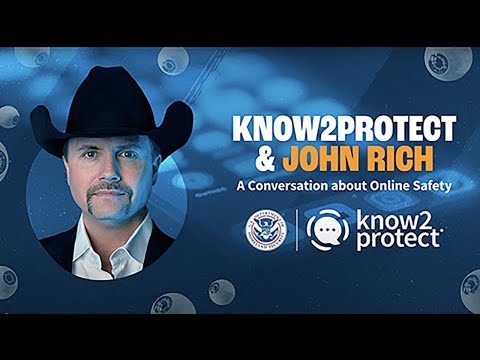
Homeland Security agents urge parents to lock down kids' social media in KnowToProtect livestream
Loading...
Summary
Department of Homeland Security officials and a Homeland Security Investigations special agent outlined how online predators target children, cited growing tip volumes, and gave parents step-by-step safety measures including privatizing accounts, removing unknown followers and disabling photo location metadata.
Country singer and host John Rich invited Department of Homeland Security officials and Homeland Security Investigations (HSI) agents to a livestream to explain how online predators target children and what families can do to reduce risk. The event featured an opening from Kristi Noem, identified in the livestream as Secretary of Homeland Security, and a detailed presentation from Dennis Fetting, who introduced himself as a Special Agent with HSI and a decade-long leader of child exploitation investigations.
"At the Department of Homeland Security, our mission is to protect the American people, and that includes protecting our children," Kristi Noem said, stressing a federal campaign called KnowToProtect.gov. The site and related Project iGuardian materials were presented as resources parents and communities can use to learn prevention steps and reporting options.
HSI Special Agent Dennis Fetting gave an extended walkthrough of common exploitation pathways, examples from investigations, and concrete steps families can take. "This is information that that every family needs to hear," Fetting said, and then demonstrated how predators move from games and public social posts to direct contact and extortion.
Fetting cited long-term trends and case examples his office has investigated. He said child-exploitation tips to the National Center for Missing and Exploited Children (NCMEC) have grown exponentially, noting a figure shown in the presentation that in 2023 the clearinghouse received about 36,000,000 tips. He described multi-jurisdictional prosecutions of dark‑net operators and hands-on offenders, and summarized recent cases discussed in the livestream, including two offenders tracked by HSI (identified in the presentation by the monikers Warhead and Crazy Monk) and other prosecutions handled by HSI Boston, HSI Tampa and other offices.
The presentation emphasized three recurring exploitation methods: meeting children in gaming and chat platforms, moving conversations to social media or direct messaging, and using images or video for sextortion. Fetting warned that generative AI now lets offenders create or alter sexual content from ordinary photographs and said his office encountered a case in which an arrested offender had thousands of AI‑generated child sexual abuse images on his devices.
Fetting demonstrated specific, immediate steps parents and teens can take: set social accounts from public to private, review and remove unknown followers, disable location services on camera apps (so photos do not carry GPS metadata), and restrict app installation and screen time through built‑in controls such as Family Share on iPhone. He showed how a public Instagram post tied to a place can be used to find students who attend a nearby school and how Snapchat’s Snap Map can reveal a child’s real‑time location if enabled.
On handling incidents, Fetting advised stopping contact with the offender, saving evidence, and reporting to authorities rather than paying extortion demands. He said law enforcement treats juveniles who are exploited as victims and described state and local options for peer‑to‑peer incidents in schools; he urged families to contact local law enforcement or the HSI tipline referenced in the livestream (listed on-screen as 604-0423) and to use KnowToProtect.gov and NCMEC resources.
The presenters framed prevention as a mix of digital hygiene and family practices: slow rollout of devices, parental controls, periodic checks of friends and followers, contractual agreements with teens about device use, and open conversations. Fetting and the livestream host recommended that community groups and schools request Project iGuardian presentations or use the recorded livestream when an in‑person agent is not available.
The event closed with an appeal to share the resources widely. Host John Rich repeatedly asked viewers to repost the livestream to broaden reach, and Fetting reiterated law enforcement’s commitment to pursue offenders: "Stop or be brought to justice," he said, summarizing the prosecution message aimed at active predators.
For parents and guardians: the primary, actionable steps emphasized in the livestream were (1) set social media accounts to private, (2) remove unknown followers and block suspicious contacts, (3) turn off camera location metadata in device settings, (4) maintain parental control settings and platform‑specific protections (for example, Family Share on iOS), and (5) save evidence and report threats or extortion to law enforcement and NCMEC rather than paying or responding to demands.
Resources mentioned during the livestream included KnowToProtect.gov, NCMEC (and its Take It Down program), Project iGuardian materials from HSI, and a list of partner organizations shown on-screen. The presenters said HSI and partner agencies provide outreach, victim assistance, and investigative support for online child exploitation cases.