Get Full Government Meeting Transcripts, Videos, & Alerts Forever!
Get email alerts on the Housing Displacement topic
No spam. Unsubscribe anytime.
County Presentation Urges Rental Protections, Registry and Legal Help to Curb Displacement
Summary
Marin County staff presented the "Rooted in Marin" report to Corte Madera council, urging policies including a rental registry, rent stabilization options, relocation assistance, right-to-return rules and expanded legal support for renters.
Marin County staff told the Corte Madera Town Council on May 6 that displacement is eroding the county’s low-income population and recommended local policies such as a rental registry, rent stabilization options, relocation assistance and expanded tenant legal services.
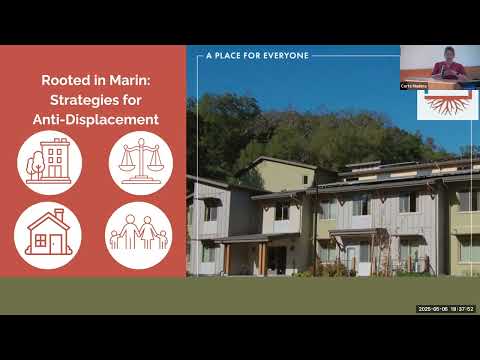
Chris Logan, the Partnership for Bay Future Fellow with the Marin County Community Development Agency, presented findings from the county’s Rooted in Marin investigation into involuntary displacement and said the report documents countywide losses of lower-income households and high rates of rent burden in Corte Madera.
Logan summarized the data: “Looking at Marin County as a whole, we’ve realized that we’ve lost about 18 people per thousand people, between 2010 and 2023. … we lost about 33 per thousand in the low income category.” He added that about 64% of the county’s workforce lives outside Marin, 42% of Marin’s population is low income, and that Black and Latino residents are overrepresented among those low-income groups.
County staff described policy tools that local jurisdictions can consider: an interjurisdictional rental registry to collect landlord-reported data and help enforce rental policies; periodic (proactive) code enforcement rather than complaint-driven inspections; tenant habitability plans when major repairs are undertaken; relocation-assistance requirements for no-fault evictions related to renovations or redevelopment; tenant right-to-return provisions; local rent-stabilization ordinances (noting state law AB 1482 sets a 5% plus CPI statewide cap that applies after a tenant’s first year in a unit); and expanded legal services, including mediation and a “right to counsel” for eviction cases.
Council members asked about emerging rent‑pricing algorithms and whether local ordinances could require landlords to disclose software they use to set rents. Logan said jurisdictions could explore requiring disclosure in a rental registry and noted state and multistate antitrust actions against companies that provide such pricing tools.
Logan and County staff described community engagement behind the report — an advisory committee, focus groups and briefings — and said the top three renter priorities identified in outreach were rent stabilization, access to legal support and addressing poor living conditions.
No local ordinance was proposed that night. Council members thanked staff and indicated interest in countywide collaboration; staff said jurisdictions are meeting and that a shared registry could reduce per‑unit costs and that county and federal funds already help fund tenant legal aid.
Quotes in this article come from Chris Logan and Amy Lyle, both present at the meeting.