Get Full Government Meeting Transcripts, Videos, & Alerts Forever!
Get email alerts on the Encampment Storage Ordinance topic
No spam. Unsubscribe anytime.
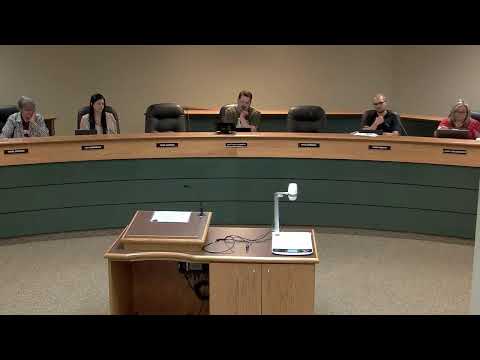
Council agrees to draft ordinance on storing property on city land, schedules May 20 work session
Summary
City staff told the council May 6 that items stored on city property — often raised in complaints and sometimes linked to homelessness — lack specific enforcement language in local code. The council gave direction to draft an ordinance and set a May 20 work session to discuss code enforcement and related issues.
City staff told the Cannon Falls City Council on May 6 that repeated complaints about materials stored on city‑owned property exposed a gap in the city’s ordinances and prompted a discussion about whether the council should draft a new ordinance to give staff clearer enforcement tools.
City Administrator John said there were no known individuals currently exhibiting homelessness who were staying on city property at the location in question, and that police “have done, in my opinion, a very good job to maintain connection with these individuals” and have offered services that some people have refused.
John said the problem is broader than homelessness in some cases: abandoned materials and private property stored at the ends of alleys and other city‑owned strips have generated complaints but limited enforcement options. He outlined enforcement tradeoffs: more proactive code enforcement can be effective but will require staffing and can become expensive if legal steps (attorney involvement, court orders, removal) are needed.
Council members expressed support for drafting an ordinance. At the meeting they agreed to hold a joint work session with the planning commission and staff at 5:00 p.m. on May 20 to discuss drafting a local ordinance and related enforcement issues and resources.
Staff flagged several clarifying points during discussion: the city can sometimes certify costs to property taxes after abatement, alleyways are commonly implicated, and effective enforcement may require dedicated code enforcement staffing. John and other staff described previous approaches — outreach first, then escalating to legal remedies when necessary — and cautioned that recovering costs through taxes is not guaranteed in every case.
Council members said the item should be discussed in detail at the May 20 work session, which will include planning commission members and staff, and that the work session could consider whether additional city staffing or a broader code enforcement review is needed.