Get Full Government Meeting Transcripts, Videos, & Alerts Forever!
Get email alerts on the Open Government Law topic
No spam. Unsubscribe anytime.
Attorney General’s Office delivers annual open-government refresher to Citizen Commission
Summary
Matt Kernitz of the Washington Attorney General’s Office gave a high-level refresher on the Public Records Act and Open Public Meetings Act, emphasizing disclosure presumption, records retention, PRA response timelines, and limits on private communications among commissioners.
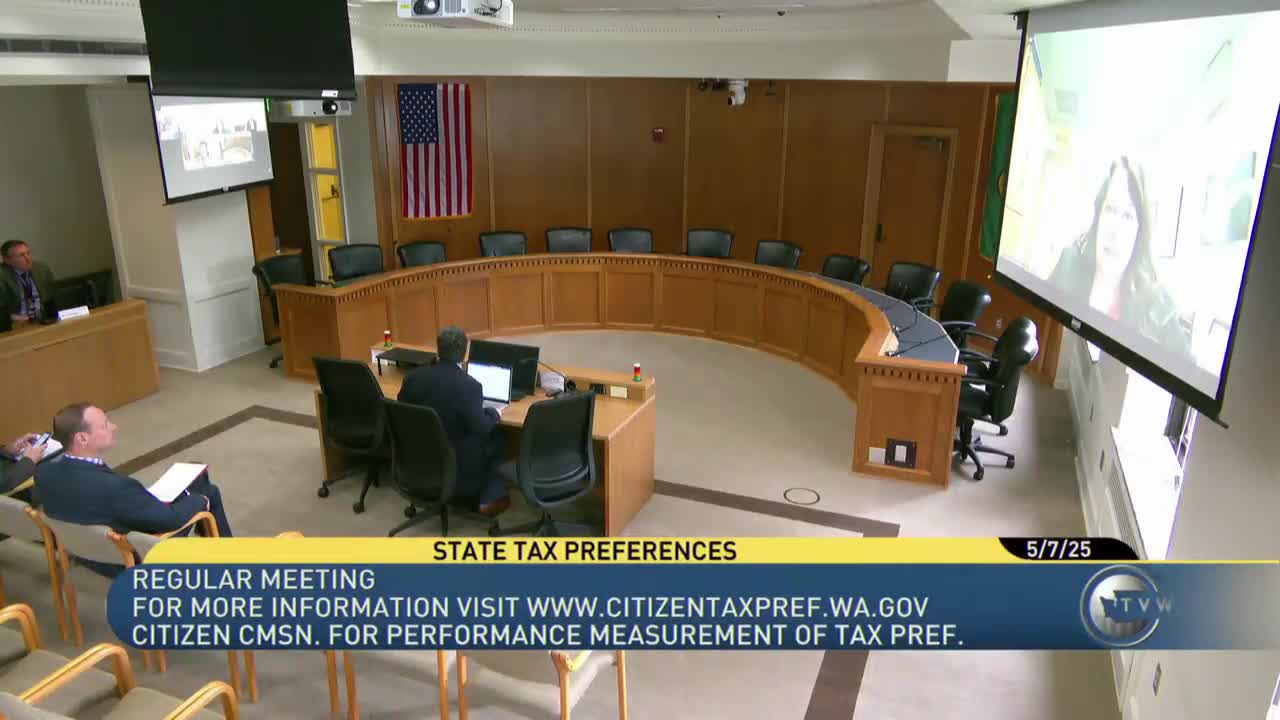
The Citizen Commission on Tax Preferences received its annual open-government refresher on May 7 from the Washington Attorney General’s Office, which emphasized that public records are presumed open, that retention schedules apply, and that public meeting rules restrict private discussions among a quorum of members.
Matt Kernitz, senior counsel and section chief for the AGO’s Advice and Compliance Section, told commissioners that the Public Records Act and the Open Public Meetings Act are “critically important” to transparency and provided a high-level overview of key compliance obligations.
Kernitz reviewed the PRA’s broad definition of a public record and the agency’s duty to search for responsive records wherever they are reasonably likely to be found. He said public-records requests may be directed to individual commissioners, and commissioners should forward any such requests to staff immediately so the agency can meet PRA timing requirements. Kernitz summarized the PRA’s five-business-day practice of sending an initial response and explained that exemptions are narrowly construed by courts; when an exemption is asserted, agencies typically redact exempt material and provide a withholding log.
Kernitz also covered records-retention obligations under state law and advised commissioners to retain records pursuant to applicable retention schedules. He said retention schedules generally govern when records may be destroyed unless a public-records request or litigation hold suspends destruction.
On the Open Public Meetings Act, Kernitz stressed that a meeting can occur whenever a quorum is together — in person, telephonically, by video or, in some circumstances, by electronic communication. He urged caution with conference calls, email chains (including “reply all”) and informal gatherings, and described the three meeting types recognized by the OPMA — regular meetings, special meetings called with at least 24 hours’ notice for specified agenda items, and emergency meetings for immediate threats to persons or property. Kernitz noted that the OPMA authorizes executive sessions for certain enumerated reasons and that staff or the commission’s attorney may attend those sessions.
Kernitz warned of possible consequences for PRA violations, including statutory penalties and orders to pay court costs and attorney fees, and recommended that commissioners consult agency staff or the AGO when they have questions about records or meeting requirements.
Speakers and officials who presented or were quoted in the meeting: Matt Kernitz, senior counsel, Attorney General’s Office; and the Citizen Commission’s chair and commissioners.