Get Full Government Meeting Transcripts, Videos, & Alerts Forever!
Get email alerts on the Pipeline Financial Assurances topic
No spam. Unsubscribe anytime.
Senate committee hears bill to bar counties from requiring cash bonds for pipeline construction
Summary
House Bill 206 would prohibit counties from requiring a cash bond as a condition of approval for pipeline construction while allowing alternative financial assurances such as performance bonds.
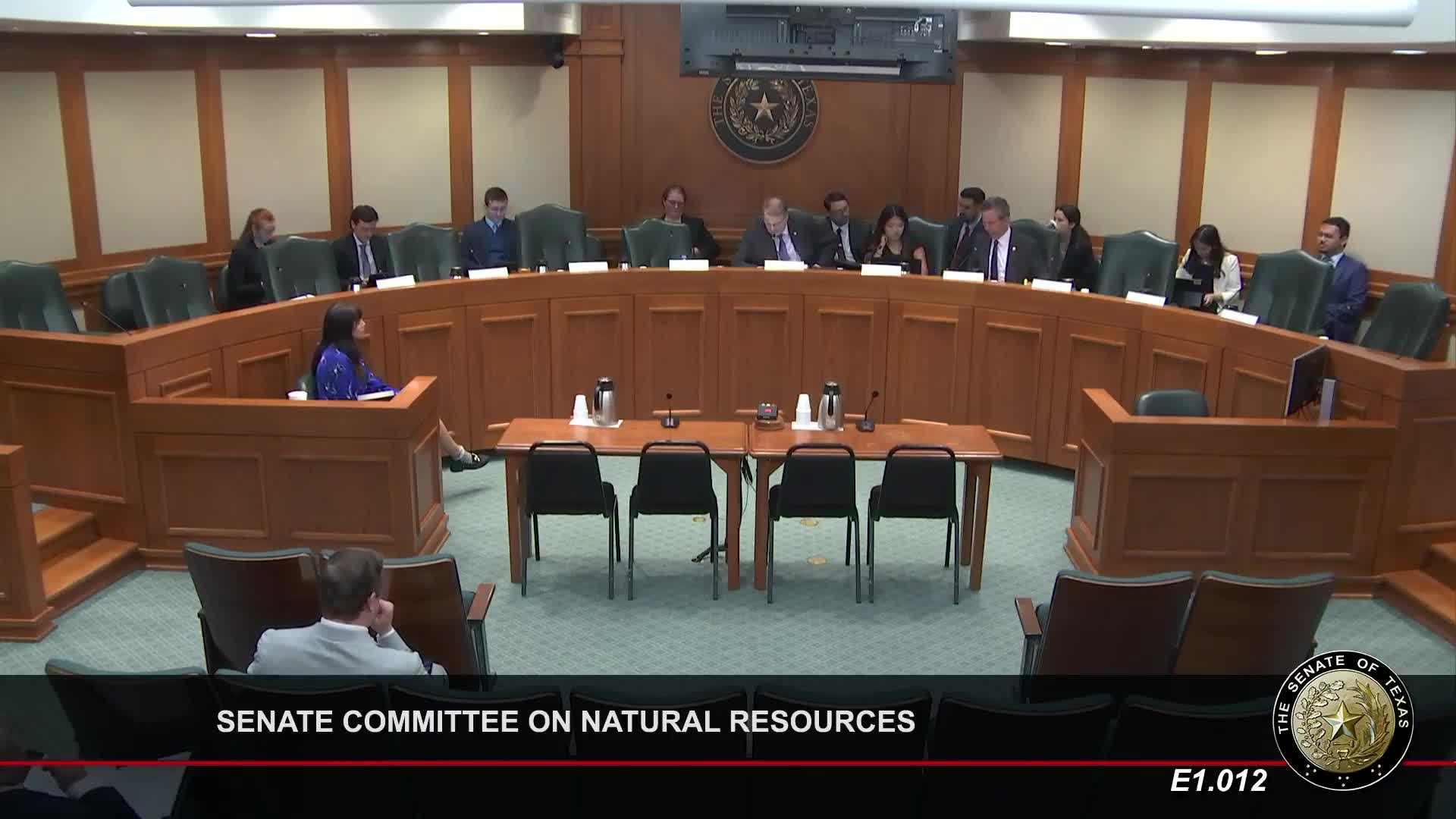
House Bill 206 would prohibit counties from requiring a cash bond as a condition of approval for pipeline construction while preserving counties\' ability to seek other financial assurances, supporters told the Senate Committee on Natural Resources on Oct. 12.
The bill\'s sponsor, Senator Birdwell, told the committee that "some counties have begun imposing a cash bond requirement as a condition of approval for the construction of a pipeline," which can create "an undue financial burden on pipeline developers and constructioners" and raise "regulatory uncertainty" for projects that cross multiple counties. He said the bill would still allow counties to recover damages through alternative forms of financial assurance such as performance bonds, and that pipeline companies would retain the option to use cash bonds if they preferred.
The bill drew public testimony from James Mann of Target Pipeline, who said his company now faces requests from 12 counties along a route they are building and that the industry historically has relied on performance bonds or repairs made during construction rather than cash deposits. "We don\'t see any reason to start laying big piles of cash in every county we go through," Mann said.
Committee staff opened and then closed public testimony without further questions from members. No vote was taken; the committee left House Bill 206 pending.
Discussion vs. decision: The committee received sponsor explanation and public testimony but took no formal action on the bill beyond leaving it pending. The transcript records concerns about financial burden and regulatory uncertainty raised by the sponsor and by a pipeline representative, and the committee did not adopt amendments or direct staff to prepare changes during the hearing.
The committee recessed later in the meeting and indicated it would reconvene and complete votes later at the desk; no final disposition of HB 206 was made in this session.