Get Full Government Meeting Transcripts, Videos, & Alerts Forever!
Get email alerts on the Parole Classification Backlog topic
No spam. Unsubscribe anytime.
Board of Parole asks legislature for millions to clear classification backlog before 2026 deadline
Summary
At a May 7 informational hearing, the Oregon Board of Parole and Post‑Prison Supervision outlined staffing and funding plans to classify roughly 11,000 historic registrants under ORS chapter 163A and described options that would cost millions over five years.
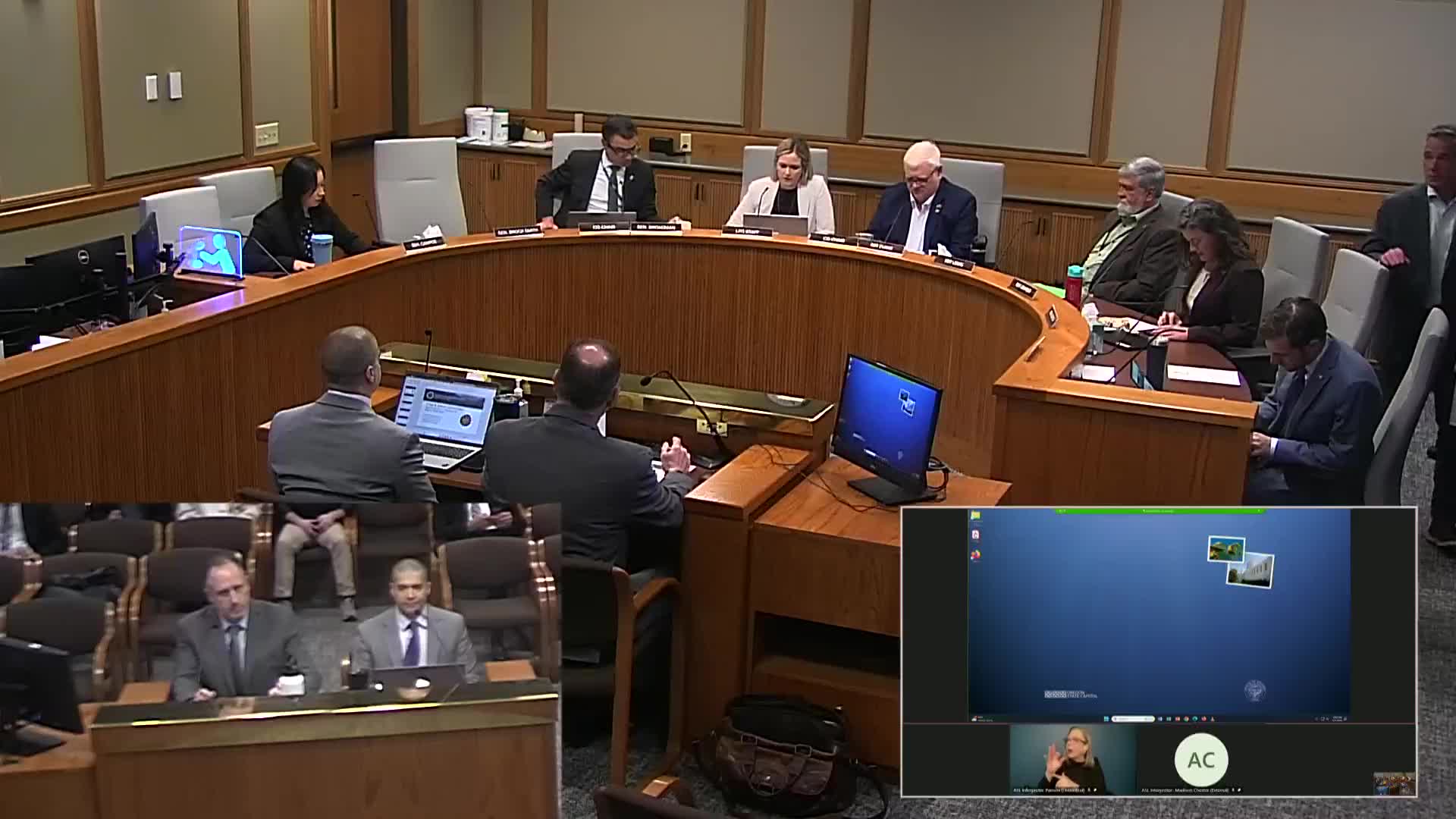
At an informational hearing Wednesday, May 7, the Public Safety Subcommittee heard from the Oregon Board of Parole and Post‑Prison Supervision on House Bill 5027, a funding request to clear a backlog of historic registrants the board must classify under ORS chapter 163A.
The board told the committee it has classified between 15,394 and 15,718 registrants to date and said about 11,091 historic registrants who live in, work in, or attend school in Oregon remain to be classified before a statutory deadline of Dec. 1, 2026. Chair John Bailey described the program’s purpose as “the program through which the Board, is classifying registered *** offenders, also known as registrants, into 1 of 3 notification levels based off their risk to reoffend.”
The classifications determine what proactive public notification is allowed and help law enforcement target limited resources, the board said. Executive Director Dylan Arthur emphasized the board’s role and limits: “The board's role in the *** offender registry is simply to classify individuals based on their risk to reoffend. We don't have a role in compliance with the registry; simply to classify them. So Oregon State Police is responsible for the registry.”
How the system works and who it covers: the board uses the Static‑99R risk assessment tool for about 90 percent of registrants; roughly 10 percent receive in‑person evaluations by certified professionals. New registrants (about 100 per month) are classified as they enter the system and are not part of the historic backlog. The board reported that a typical assessment specialist completes about 22 full Static‑99R assessments per month (about 264 per year) once fully trained; it expects hiring and training to take several months.
Recidivism data the board presented, drawn from the Criminal Justice Commission, showed a marked difference across levels: 5‑year recidivism of about 21.5 percent for level‑3 registrants versus about 1.3 percent for level‑1 registrants. For the unclassified historic population (excluding people convicted of multiple separate *** offenses), the board reported a 5‑year recidivism rate of 1.1 percent.
Funding and staffing proposals: the board described multiple plans to eliminate the backlog. A five‑year “targeted assessment” option would add nine limited‑duration positions and carry a five‑year cost the board estimated at $7,763,000; the five‑year “full assessment” option would add 14 limited‑duration positions (cost shown in the board’s materials). Ten‑year variants would require fewer additional positions but extend the timeline. The board also requested one to two additional hearings officer positions, an operations manager to oversee a temporary staffing surge, and limited‑duration support staff.
The board explained the targeted assessment approach would apply a shorter, prioritized set of Static‑99R constructs to about 40 percent of the historic unclassified population (approximately 4,353 people), aiming to identify those likely to be level‑1 more efficiently; the board said an assessment specialist could conduct about 2,000 of these targeted assessments in a year under that methodology. The board said it would not use targeted assessments in a way that would misclassify level‑3 registrants as level‑1, and that any person seeking relief or reclassification would receive a full Static‑99R before a hearing.
Committee members pressed the board on why the backlog remains large and on enforcement and compliance questions that the board said are handled by Oregon State Police. Several legislators said the public has a right to know about high‑risk registrants and sought data on error and overturn rates for classifications; the board said it would provide those figures.
Next steps: the presentation closed with the board urging funding to hire and train additional assessment specialists and hearings officers. No formal action or vote occurred at the informational hearing; the subcommittee requested further information from the Oregon State Police and indicated it would review the board’s fiscal plans as part of the budgeting process. The subcommittee adjourned and will reconvene May 14 for a phase 3 work session orientation.