Get Full Government Meeting Transcripts, Videos, & Alerts Forever!
Get email alerts on the Traffic Safety Reckless Driving topic
No spam. Unsubscribe anytime.
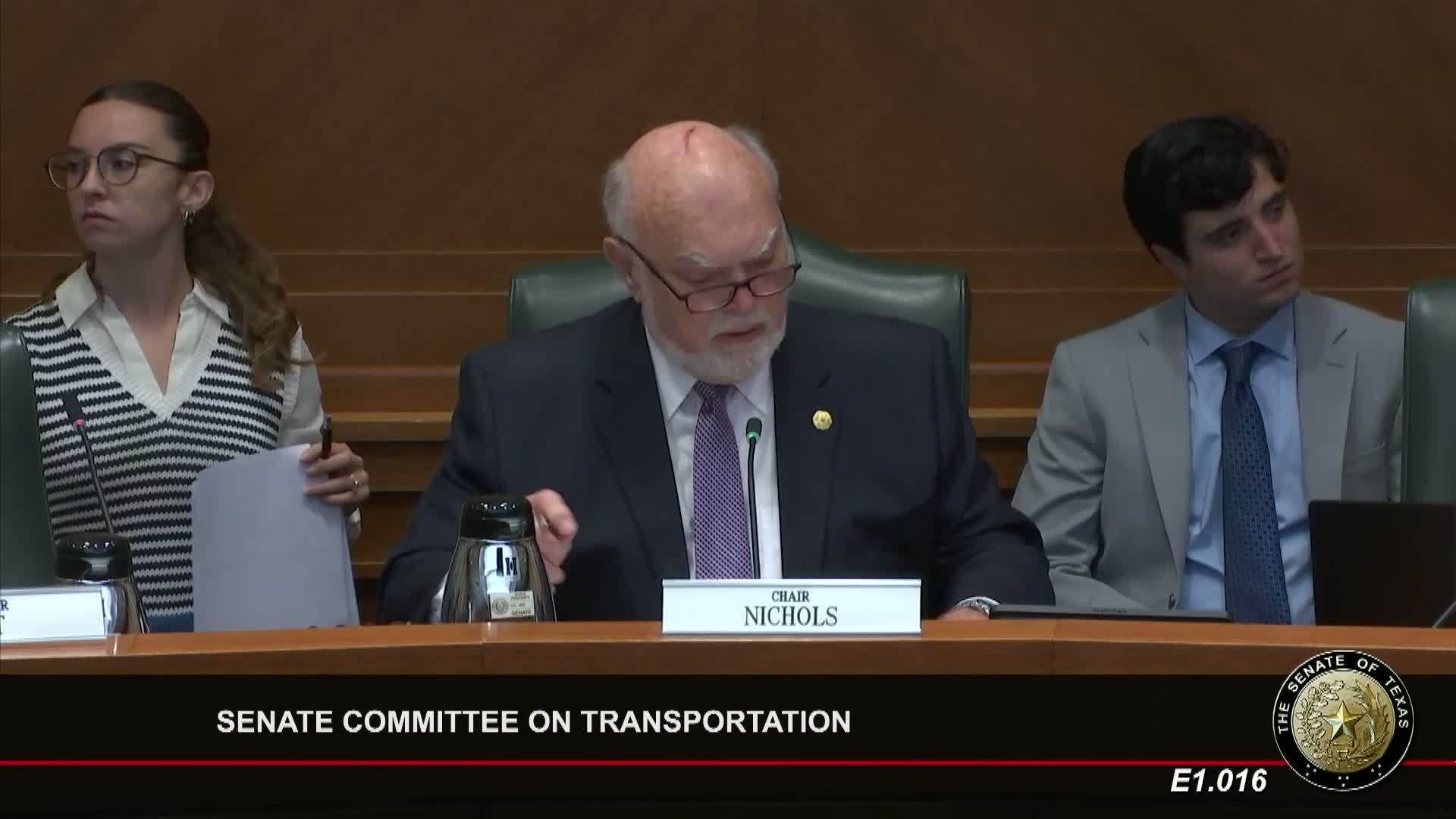
Senate committee advances bill creating new felony levels for reckless driving
Summary
A Senate Transportation committee advanced Senate Bill 27 99 to create intermediate felony charges for reckless driving that causes injury, after prosecutors and lawmakers said current law forces under- or overcharging.
The Senate Committee on Transportation advanced Senate Bill 27 99 on a bipartisan voice vote after sponsors and prosecutors said the measure closes a gap in the Penal Code that leaves prosecutors with only a low-level misdemeanor or a second-degree felony aggravated-assault charge when reckless driving causes injury.
Senator Charles Creighton, the bill sponsor, told the committee that “there is no class A or B misdemeanor, no state jail felony, and no third degree felony charges in between, which causes an undercharging or overcharging dilemma.” He said the bill would add a state-jail felony for bodily injury and a third-degree felony for serious bodily injury, creating charging options between a misdemeanor reckless-driving citation and a second-degree felony aggravated assault.
Taylor Venegas, chief prosecutor for vehicular crimes at the Montgomery County District Attorney’s Office, testified in support and said prosecutors need discretions that fit the conduct and harm. “Really, what we’re looking to do here is do fairness by both victims and defendants,” Venegas told the committee. She described situations in which an injured victim would currently be charged only under a misdemeanor with up to 30 days in jail and a $200 fine or else face the jump to an aggravated-assault felony carrying up to 20 years in prison.
Senator Juan Hinojosa asked whether the bill would cover incidents such as collisions that killed a funeral- procession participant and a police motorcycle officer; Creighton and Venegas said the new tiers would allow prosecutors to charge based on severity and avoid the present extremes.
Committee members placed the bill on the local, uncontested calendar after a roll call that recorded six ayes and no nays. The committee’s action advances the measure to the full Senate for further consideration.
What the bill would change: Creighton described the current options in court as “a minor traffic violation” or “second degree felony aggravated assault, which carries a penalty of up to 20 years in prison and a $10,000 fine,” and said SB 27 99 creates intermediate felonies so charging matches the injury and culpability.
Public safety groups and law-enforcement associations registered support; Taylor Venegas and resource witnesses from the Department of Public Safety and local district attorneys appeared in support. No formal amendments were recorded in committee.