Get Full Government Meeting Transcripts, Videos, & Alerts Forever!
Get email alerts on the Electrical Code And Inspections topic
No spam. Unsubscribe anytime.
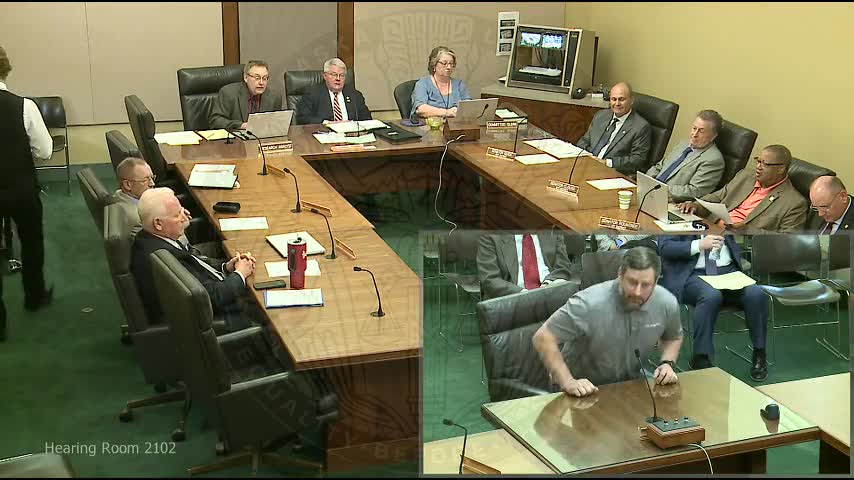
Nominee for Nebraska Electrical Board emphasizes safety, affordability and in-person inspections
Summary
Tyler Ritz, nominee for the Nebraska Electrical Board and a Kearney electrical inspector, told the General Affairs Committee he wants to balance code safety with housing affordability and prefers in-person inspections over drone use; committee members pressed him on code changes and inspection workload.
Tyler Ritz, the nominee for the Nebraska Electrical Board and an electrical inspector for the city of Kearney, told the General Affairs Committee he aims to balance safety and housing affordability while enforcing the electrical code.
Ritz, who said he has been an electrician for 20 years and an inspector for nearly eight years, told the committee, “keeping safety and affordability in mind, that's what I'm hoping to help with.” He also said he has been a member of the International Association of Electrical Inspectors (IAEI) for about four years, an organization the nominee said has rebranded to the Alliance of Electrical Industries.
Ritz described code-adoption challenges from recent National Electrical Code cycles and enforcement issues he encounters in the field. He said some language in the 2021 code led to removal of certain provisions in local practice, citing ground-fault protection requirements for basements and an outdoor service disconnect as examples he and his colleagues found difficult to enforce.
When asked about inspection volumes, Ritz said the Kearney building and electrical departments issued about 500 permits in the previous year (he said that number was lower than typical), that the jurisdiction usually sees closer to 600–700 permits in a year, and that he has performed “probably at least a thousand inspections.”
On use of drones for inspections, he said, “I am on the side of doing in person inspections,” adding that in-person presence makes it easier to spot safety issues and poor workmanship. When asked what types of shortcuts he sees in the field, Ritz said the most common problem is undersized wire runs and other poor craftsmanship that increase the risk of voltage drop and potential damage.
There were no online comments recorded for the nomination. The committee concluded public testimony and announced it would hold an executive session after the hearing.