Get Full Government Meeting Transcripts, Videos, & Alerts Forever!
Get email alerts on the Racing And Gaming topic
No spam. Unsubscribe anytime.
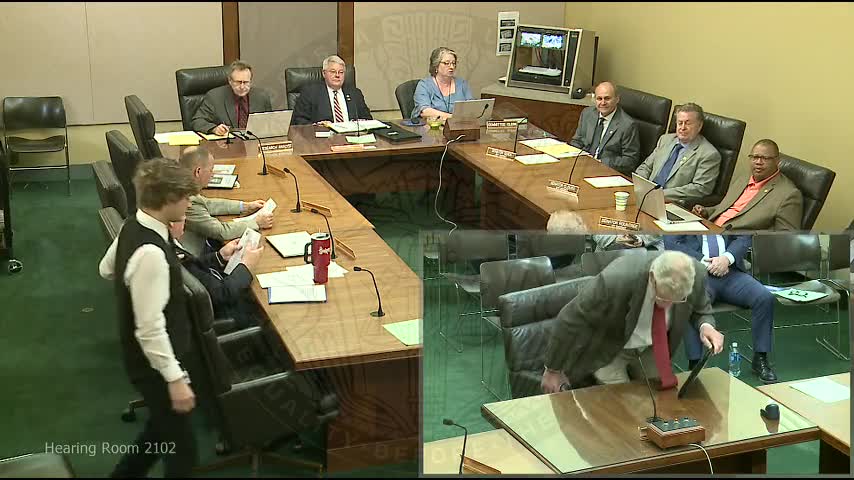
Senate committee hears nominees for Nebraska Racing and Gaming Commission; nominees stress racing, regulation and economic benefits
Summary
The General Affairs Committee heard two nominees for the Nebraska Racing and Gaming Commission who emphasized restoring horse racing, coordinating with new casinos and maintaining regulatory safeguards; no committee vote was taken.
Jay Christopher Stinson, a current appointee to the Nebraska Racing and Gaming Commission, told the Nebraska Legislature’s General Affairs Committee that the commission’s role is regulatory and that recent casino openings create an opportunity to revive horse racing in the state.
Stinson, a nominee appointed by Gov. Jim Pillen and serving as an at-large commissioner, told the committee, “we are regulators, nothing more.” He traced the commission’s history to its 1935 founding and said the panel expanded over time; he described a decline in U.S. thoroughbred foal crops from 51,000 in 1986 to about 18,000 last year and called for stronger in-state breeding tied to casino revenue.
The nominee said racing days in Nebraska rose from 54 in 2024 to 65 this year and that tracks in Lincoln and Columbus will host 15 days each in the near term. “I believe that that trend can and will be reversed in Nebraska if, with the head of help of casinos, the breeding of horses can make economic sense,” Stinson said. He also said the industry and local governments benefited from gaming revenue, adding the sector generated about $29 million in tax revenue last year.
John Barrett, another nominee for the commission and vice president of government and regulatory affairs at Great Plains Communications, said the 2020 voter approval to legalize gaming left a public expectation that the industry be well regulated and that revenues support priorities such as property tax relief. “It’s now our responsibility to ensure that the industry is well regulated, provides high quality entertainment options, and generates meaningful revenue to support property tax relief,” Barrett said.
Committee members asked nominees about racing schedules, breeding infrastructure and attendance. Stinson described Grand Island, Lincoln and Columbus as the primary tracks in recent scheduling and said some tracks (he named Grand Island and Omaha) face constraints that limit their future operations. He said Ogallala would host quarter-horse racing rather than the thoroughbred meets.
There were no online comments recorded for either nominee and the committee did not take a public vote on the nominations during the hearing.
The committee proceeded to hear additional nominees and announced it would hold an executive session after concluding public testimony.