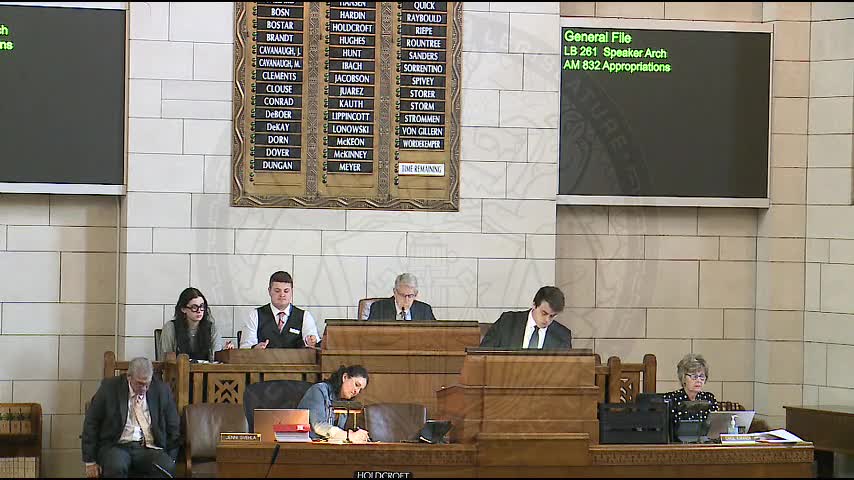
Senators debate AM 12‑46 to fund Meals on Wheels as floor dispute erupts over bill‑attachment tactics
Loading...
Summary
Senator Meyer moved to amend the LB 261 committee amendment with AM 12‑46, seeking $4,000,000 to shore up Meals on Wheels and senior‑center funding.
Senator Meyer moved to amend the committee amendment to LB 261 with AM 12‑46, an amendment intended to address an estimated $4,000,000 shortfall in Meals on Wheels and senior‑center funding by using money from the Medicaid managed care excess profit fund.
Meyer and supporters described rising food and delivery costs, shrinking reimbursement rates, and an aging population as the rationale for the change. “Our average annual food total costs for 2024 to prepare a meal was $12.02 per meal,” Meyer read into the record, citing local program testimony. He noted a representative case in which the current reimbursement rate was $4.55 per meal and described volunteers and fuel costs that make current reimbursement levels unsustainable.
Opponents, led by Senator McKinney, said the amendment was inserted to circumvent floor consideration of his priority bill and that the parliamentary move would deny regular debate. “If this amendment gets attached, that means Terrell really just is here to be a disruptor,” McKinney said on the floor, warning he would use procedural time if the amendment advanced. He said his priority bill — a family resource/juvenile services measure that had committee support — had been derailed earlier in the process and that attaching it as an amendment was improper.
Other senators urged a narrower reading. Senator Kautz supported AM 12‑46 on senior services grounds, saying the eight area agencies on aging in the state faced large shortfalls and that $2,000,000 per year (the amendment's effect) would be only about $250,000 per agency. Senator Jacobson and others said they supported funding the Meals on Wheels shortfall and described the amendment as a pragmatic way to deliver needed dollars now. Senator Kavanaugh opposed AM 12‑46, saying it was unnecessary because the underlying language and fiscal changes exist in LB 3‑82 (the bill structure already being considered) and that adding the amendment to LB 261 did not carry the same enabling language.
Why it matters: The floor exchange highlights two separate issues: a programmatic shortfall affecting seniors and a procedural dispute over whether policy measures should be advanced via standalone bills or attached to large appropriations measures. Supporters framed the amendment as a work‑around to deliver urgent, cash‑funded aid to senior nutrition programs. Opponents framed it as rank‑and‑file process and warned of retaliation and extended floor time.
No final vote on AM 12‑46 was recorded in the transcript. Senators on both sides urged colleagues to consult committee materials or forthcoming fiscal notes; some members said the amendment used non‑general‑fund revenue (managed‑care excess profit funds) and would not add to the general‑fund total.
Ending: The dispute left the amendment undecided in the transcript excerpt. Meyer and his supporters repeated testimony about service closures and wait lists for home‑delivered meals; McKinney repeatedly objected to the parliamentary tactic and warned of procedural consequences if the amendment were adopted.