Get Full Government Meeting Transcripts, Videos, & Alerts Forever!
Get email alerts on the Education Equity topic
No spam. Unsubscribe anytime.
Witnesses urge Massachusetts to codify federal protections for immigrant, English‑learner and disabled students
Summary
Advocates, legal experts and the attorney general's office told the Joint Committee on Education that state law should enshrine federal protections for immigrant students, English learners and students with disabilities to prevent rollbacks at the federal level and to ensure access to interpretation and special‑education safeguards.
Advocates, lawyers and state officials told the Joint Committee on Education on Wednesday that Massachusetts should put federal protections for immigrant students, English learners and students with disabilities into state law to ensure access to public education regardless of what happens in Washington, D.C.
Supporters said the bills filed as H.650 and S.436 would not create new rights but would codify long‑standing federal protections — citing Plyler v. Doe, the Individuals with Disabilities Education Act and federal guidance for English learners — so the Commonwealth can guarantee services even if federal enforcement weakens. "By codifying these rights into state law, we ensure that Massachusetts continues to uphold equity and education no matter what happens in Washington, DC," Sen. Francisco Paiano told the committee.
The bills drew testimony from a wide coalition: parents and parent‑advisory councils, immigrant‑rights groups, child‑advocacy lawyers, the attorney general’s office and nonprofit legal clinics. Diana Santiago, legal director at Mass Advocates for Children, said the legislation would "affirm our state's commitment to education access for all children, including immigrant children without documents" and would "codify guidance" on bilingual evaluations and trained interpreters.
Chief Deputy Attorney General Abby Taylor and Liza Hirsch of the attorney general’s children's justice unit told the committee the office supports the bills and warned of diminished federal enforcement. "Enforcement of students' federal civil rights in schools has been decimated," Taylor said, noting closures and staffing declines at federal civil‑rights offices and urging the legislature to act now. The AG’s office and several legal groups said codifying federal rules would preserve protections for enrollment, procedural safeguards in discipline and language access for parents.
Parents and current and former students who testified described barriers in practice: limited or unqualified interpreters at IEP meetings, families deterred from enrolling children by rumors of immigration enforcement and students with disabilities excluded from school without appropriate procedural review. Ismael Rondon, president of an English Learner Parent Advisory Council in Lawrence, said many families "feel totally uncomfortable" participating without competent interpretation. Emily Romero Gonzalez told the committee she grew up undocumented and credited access to public education with giving her a path to college and advocacy. Legal advocates emphasized specific safeguards the bill would assert at the state level: the right to enrollment regardless of immigration status; a manifestation‑determination process for disciplinary removals of students with disabilities; appropriate assessments for English learners with disabilities; and requirements that school interpreters be trained, not only bilingual.
Testimony also included local social‑service and child‑welfare groups that said educational access affects juvenile‑justice and health outcomes. "School attendance helps children grow socially, emotionally and intellectually," Avery Farmer of Citizens for Juvenile Justice told the committee, urging lawmakers to preserve the protections under state law so advocates can reassure families.
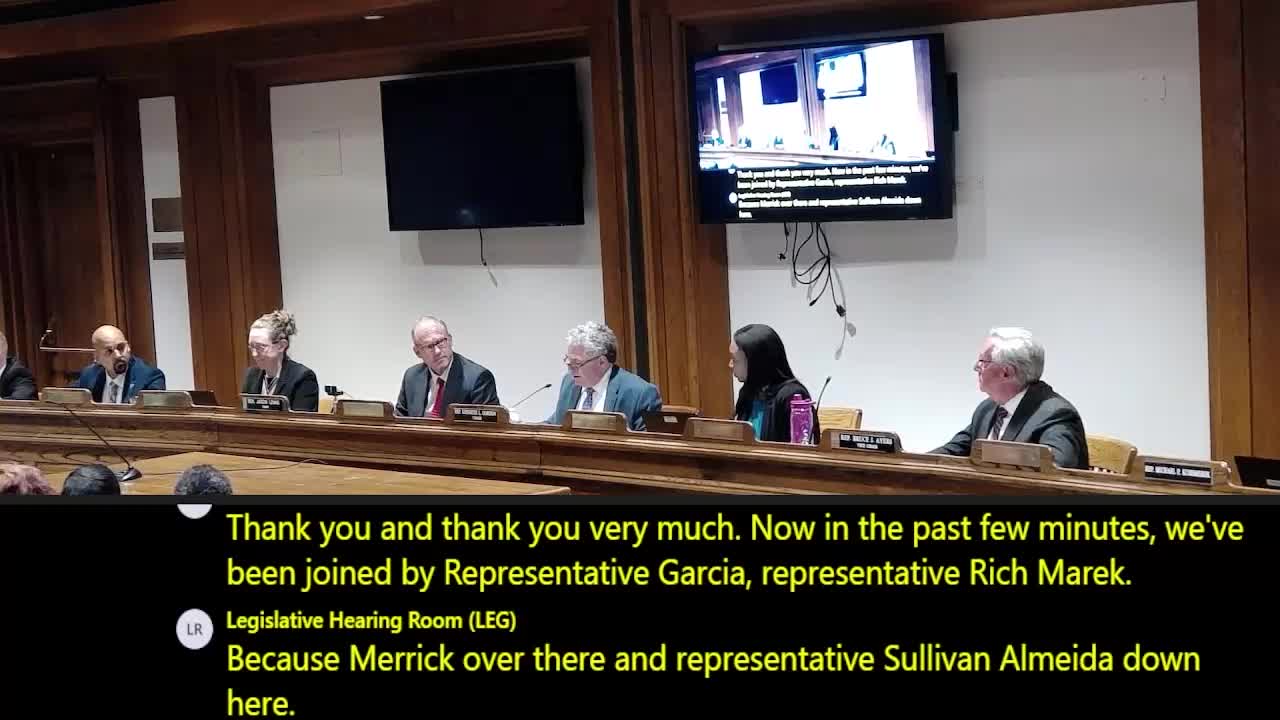
No committee votes were taken during the hearing; the session consisted of public testimony and questions from legislators. Supporters asked the committee to report the bills favorably so the state can maintain protections regardless of federal policy changes.