Get Full Government Meeting Transcripts, Videos, & Alerts Forever!
Get email alerts on the Broadband Access topic
No spam. Unsubscribe anytime.
Lawmakers hear broad coalition on broadband: low‑cost plans and faster permitting needed, stakeholders say
Summary
Representatives, municipal leaders, nonprofit advocates and broadband providers told the Joint Commission that Massachusetts needs both affordable low-income broadband plans and regulatory fixes (pole access/one‑touch make‑ready) to expand reliable service statewide.
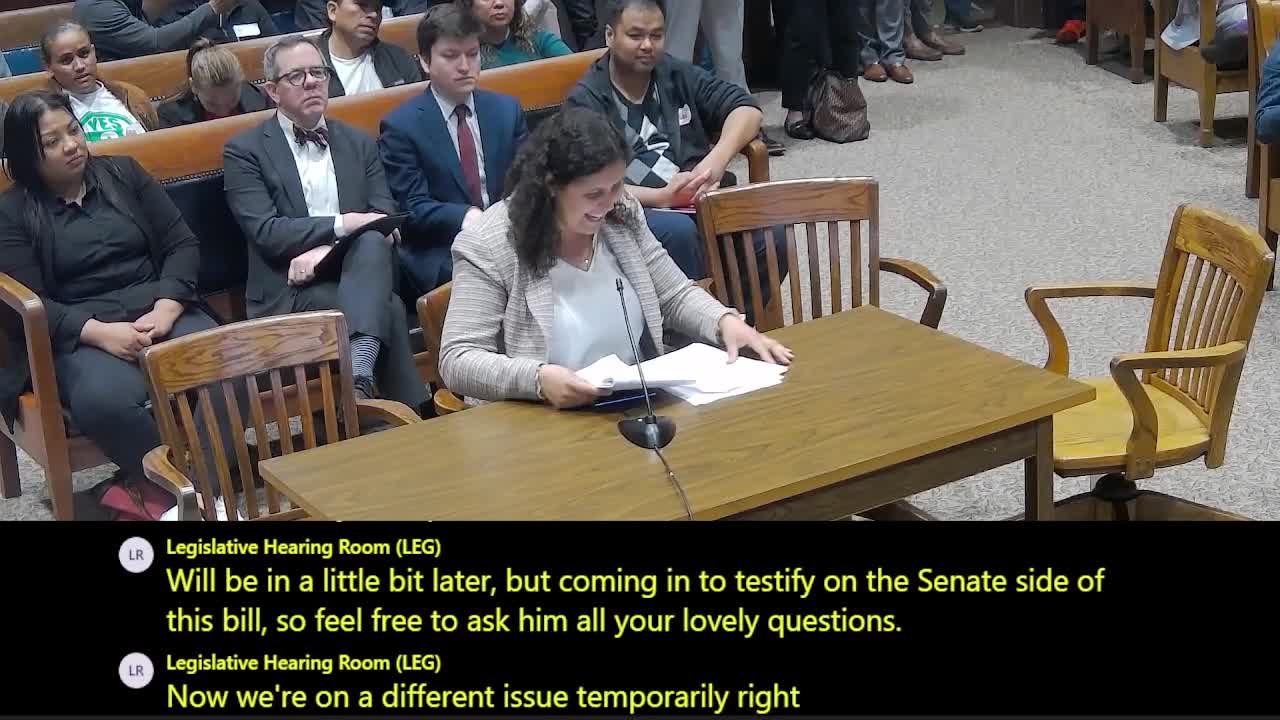
Lawmakers on the Joint Commission on Telecommunications, Utilities, and Energy heard more than two hours of testimony calling for two complementary fixes to Massachusetts' broadband problems: affordable subscription options for low‑income households and faster, predictable permitting and pole-access rules to speed network builds.
Representative Rita Mendez, who filed legislation to preserve broadband service for low‑income consumers, told the committee the bill would create a flat-rate option and urged support so that "people can be able to have access to high speed Internet," calling it an essential service for education, work and health care.
Why it matters: witnesses said federal emergency support such as the Affordable Connectivity Program has ended and state action is required to prevent disconnections and encourage competition. At the same time, providers and municipalities said long permitting timelines and complex pole-attachment processes block investment and slow construction of fiber to unserved or underserved neighborhoods.
On affordability, Senator Paul Feeney (testifying during the hearing) and municipal digital equity advocates said many households rely on discounts to stay connected. Peter Faberito, Boston’s senior digital equity manager, said Boston had roughly 51,000 households enrolled in the federal program and that survey data shows cost remains a key barrier: "24% of Boston residents with Internet say their service is unaffordable," with higher rates in several neighborhoods.
On permitting and access, Steven Johnston, chief executive officer of Open Cape, and Heidi Mahoney of GoNetSpeed described long waits for pole licenses and make‑ready work. Johnston said one project to license 29 poles took 14 months and called the delay "economics that doesn't work" for smaller providers. Heidi Mahoney and Jamie Hoare urged adoption of one‑touch make‑ready, a pole‑access model used in other states that reduces the time between application and build.
Municipal and nonprofit witnesses emphasized equity. Andrea Park of the Massachusetts Law Reform Institute and LaCherie Weems of the Alliance for Digital Equity described residents who cannot afford existing rates or who face logistical barriers to enrollment. Community digital navigators and nonprofit providers recounted clients who used telehealth, applied for jobs online, or risked housing instability when they lost affordable connectivity.
Committee process: the hearing brought together multiple bills including H.3527/S.2318 (low‑income affordability plan), H.3478 (permitting/pole access), H.3546 and S.2285 (one‑touch make‑ready and related fixes). No committee vote was taken; witnesses asked lawmakers to move the bills to enable both short‑term affordability options and longer‑term infrastructure upgrades.
Looking ahead: proponents asked the commission to pursue statutory fixes to require affordable plans and to adopt regulatory or statutory changes to pole attachment and make‑ready practices so private and nonprofit providers can deploy fiber more quickly.