Get Full Government Meeting Transcripts, Videos, & Alerts Forever!
Get email alerts on the Rodent Control Site Cleanliness topic
No spam. Unsubscribe anytime.
Council hears city plan to measure and scale rodent-control interventions; site-cleanliness license counts rising
Summary
City departments described sensor pilots, new rodent-resistant trash cans, a cross-department rodent-action working group and growth in site-cleanliness licensing; officials also discussed tools for chronic problem properties and receivership.
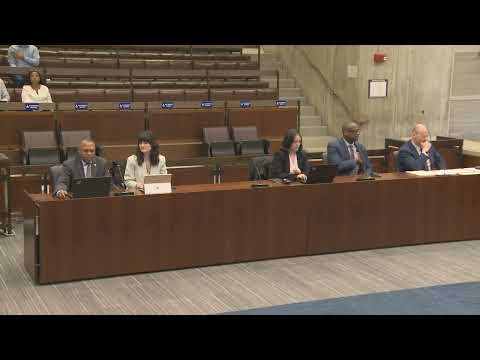
City officials told the City Council’s Ways and Means committee they are deploying sensors and targeted interventions to measure what reduces rodent activity, expanding site-cleanliness licensing and using multiple enforcement tools on chronic problem properties.
Inspectional Services Commissioner Tanya Del Rio and property management officials described a multi-agency working group that is deploying interventions and measuring outcomes with rodent sensors. Del Rio said complaint data alone is an imperfect input and that sensors will help identify hot spots where residents do not always call 311. Public works replaced public trash cans in the North End with rodent-resistant containers as a trial; officials said they will compare sensor data to measure how effective that intervention is versus others.
Eamon Shelton, property-management commissioner, said property management and public facilities support graffiti removal, building stabilization and workforce-alert pilots for municipal staff. Shelton told councilors the department has improved graffiti removal operations and that open graffiti cases fell to a record low of 290 at the close of 2024. He also described the city’s workforce-alert pilot to notify employees of building emergencies.
Staff reported rapid growth in site-cleanliness licensing: 2,112 active licenses in 2022, 2,400 in 2023 and 3,199 in 2024, reflecting expanded coverage of large dumpsters and bulk-refuse sites under the site-cleanliness ordinance. Officials said the site-cleanliness licensing program is still being expanded to capture additional residential bulk-refuse sites and that residents should report problematic locations via 311 for enforcement follow-up.
Responding to council questions about tools for persistent problem properties, officials described a task force that includes police, ISD and other agencies. They said enforcement tools include fines, court enforcement, receivership and, in some cases, charging property owners for police presence at problematic sites. The city said the chronic-offender registry element of the rental-registration ordinance remains a work in progress because it requires database upgrades and cross-agency data sharing; staff said they will continue to implement the registry and other automation as the city upgrades systems.
Public facilities provided a FY26 pest-control allocation for property-managed sites of $50,000 and said many departments contract for pest services for properties they manage (Boston Housing Authority, Boston Public Library and others). Officials said the city also trains partner departments and BHA staff on alternatives to toxic rodenticides and on best practices for waste handling.
Councilors asked for more follow-up: staff promised to share pilot results and to keep councilors informed about scaling successful interventions and progress on the chronic-offender and dumpster-licensing effort.