Get Full Government Meeting Transcripts, Videos, & Alerts Forever!
Get email alerts on the Municipal Budget And Strategy topic
No spam. Unsubscribe anytime.
College Place outlines five priorities, warns of dwindling water and tighter revenues in 2025 State of the City
Summary
City Administrator Mike Rizzatello presented the 2025 State of the City, describing a five‑priority strategic plan, an $85 million budget picture, ongoing capital projects and near‑term challenges including water supply, deferred storm and wastewater maintenance, and declining state/federal assistance.
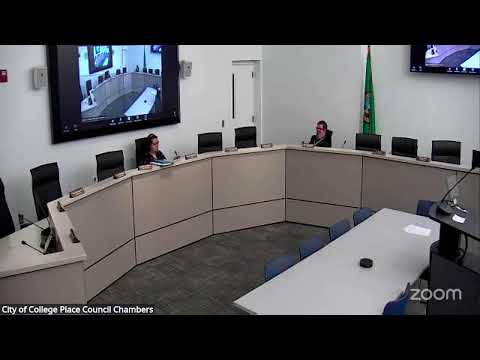
City Administrator Mike Rizzatello delivered the 2025 State of the City to the College Place City Council on May 6, laying out a 2025–2035 strategic plan built around five priorities — a connected community, a fun community, a resilient community, a safe community and an affordable community — and summarizing major projects, budget figures and near‑term risks.
Rizzatello said the city adopted its fiscal year 2025 budget last November and that “our revenues and expense are just short of $85,000,000.” He told the council the city operates multiple funds and that property taxes provide only a sliver of local revenue: about 2.72¢ of every dollar of property tax goes to the City of College Place general fund.
The presentation listed projects and programs tied to each strategic priority: expanding communications and volunteer advisory commissions; a year of community events and downtown identity work led by the Koala Creative District; infrastructure investments in roads, stormwater, wastewater and water storage; planning to replace the police station and pursue a state grant–funded fire station energy project; and economic development activities including property acquisition downtown and preapproved housing plans intended to speed development.
Rizzatello and staff flagged several near‑term challenges. They said federal and state assistance has declined and inflation is eroding purchasing power, contractors are scarce locally which delays projects, deferred stormwater maintenance will require additional filtration and upkeep, and the wastewater system faces expensive state and federal mandates with limited outside funding. He also emphasized a need for water storage, saying local water tables are falling.
Council members generally praised staff outreach and departmental engagement; Council Member Williams noted public works outreach and tours of the wastewater plant and the department’s graffiti removal and retaining‑wall work drew citizen gratitude. No formal council action was taken at the workshop; Rizzatello encouraged the public and councilors to review the full strategic plan posted on the city website for details.
The city will continue design and grant‑seeking for projects named in the plan, including the Alliance Park community center replacement, redevelopment around Martin Airfield and Lakeside properties, and incremental steps on preapproved housing and tax‑increment financing tools discussed in the presentation.