Get Full Government Meeting Transcripts, Videos, & Alerts Forever!
Get email alerts on the Capital Projects topic
No spam. Unsubscribe anytime.
Lakota staff outline $6M in building needs, ask board to consider tapping fiscal stabilization fund
Summary
District facilities staff told the Lakota Board of Education that this year’s prioritized capital needs exceed available PI funding; staff asked the board to consider using fiscal stabilization funds for one-time repairs to reach high-priority projects.
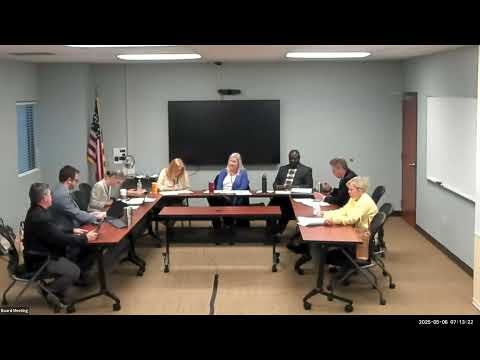
Lakota Board of Education members heard on May 6 that planned one-year capital needs for district buildings total more than $6 million, exceeding the $3 million budgeted in the district’s PI fund. District staff asked the board to consider a proposal to use fiscal stabilization funds to cover one-time work so the district can complete its highest-priority projects this year.
The request came during a presentation on the district’s annual capital plan. A facilities presenter summarized the district’s building assessments and work-order review and said the district identified about $3.7 million in high-priority work this year and a little over $6 million when medium- and low-priority items are included. “As with most years, all of our needs outweigh our funding that we have available,” the presenter said.
Board members and staff discussed which high-cost items would be deferred if the board keeps the PI fund spending at $3 million. The facilities presenter said removing identified deferred items—such as a section of the East Freshman roof, a rear entrance and circulation improvements at West, and other mid-to-low projects—would reduce the list to the budgeted $3 million. The presenter also described an East Freshman roof estimate of about $600,000 for shingles and said a metal roof option had a higher estimate (about $2.3 million for a comparable metal roof on that building).
Board members pressed on durability and the cost effects of repeatedly deferring projects. One member asked how many deferral items have been postponed for multiple years; staff replied that several items have been deferred repeatedly, and that deferred maintenance can escalate into higher-cost, emergency repairs. “At some point, these become emergencies now if you keep deferring,” a board member said in discussion.
On funding, staff said the PI budget includes $3 million for capital this year and noted a roughly $300,000 carryover from the prior year’s fiscal stabilization-funded projects. Staff reported the fiscal stabilization fund balance in discussion as about $4.1 million to $4.5 million (speakers used both figures during the conversation) and suggested using a portion of that fund—roughly $700,000 to $800,000 in one discussion—to move additional high-priority items from the deferred list into this year’s work. One board member urged caution about repeatedly using the stabilization fund: “I’m not a fan of using the fiscal stabilization year after year to defer to fix maintenance,” the member said, asking for more long-term budgeting detail before committing the fund.
Staff framed a compromise approach: prioritize roofs, HVAC (chillers and boilers), and parking-lot repairs (identified as the district’s “big three”), and return with a formal proposal listing specific one-time costs for board approval if the board wishes to use stabilization funds. The facilities presenter requested board permission to prepare a proposal of one-time costs that could be funded from fiscal stabilization and to bring that proposal back for review by the finance committee and the full board.
Discussion also covered contingency and the PI fund’s limits. Staff noted the PI contingency line was reduced to $150,000 from a more typical $250,000 and that the PI fund receives about $3 million per year, which does not automatically grow with inflation unless the board supplements it. Board members asked staff to return with a prioritized list of items that would move from medium to high priority if additional one-time funding were available.
The board did not take a formal vote on funding during the meeting. Staff said they would prepare a formal proposal and bring it to the finance committee and to the next regular board meeting for a decision.
Less-critical agenda items and scheduling were discussed after the facilities presentation, and the board moved on to the district’s five-year forecast.
Ending: The board asked staff to return with a detailed, prioritized list of one-time capital costs and a formal recommendation on use of the fiscal stabilization funds; no formal appropriation or transfer was approved at the May 6 meeting.