Get Full Government Meeting Transcripts, Videos, & Alerts Forever!
Get email alerts on the Infrastructure topic
No spam. Unsubscribe anytime.
Selectmen warn contingency near exhaustion on fire/highway building project
Summary
Members of the North Brookfield Board of Selectmen said the town’s fire/highway building project has hit repeated unexpected problems that have drained contingency funds and could force difficult choices unless additional funds or value-engineering measures are found.
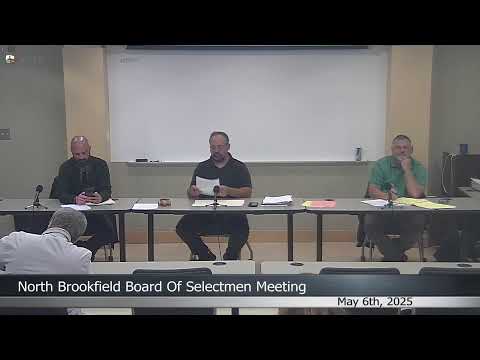
North Brookfield — Selectmen said Thursday that unexpected conditions and contract change orders have depleted contingency funds on the town’s multi‑building fire and highway project and that further unanticipated work may force the town to weigh costly contract obligations against leaving work unfinished.
The issue matters because the project is tied to other town capital plans and any large, unplanned payments could affect the upcoming town budget and the need for overrides. “The situation is dire,” a board member said during the meeting, describing multiple change orders and code-related work that emerged as contractors opened old buildings.
Board members and the building committee described a string of problems discovered during construction: late trade assignments, a $56,000 roof repair and replacement of underlying insulation, previously unidentified floor‑drain connections and the need for a new MDC (masonry drainage/containment) tank and venting tied into the apparatus bay. The committee said some existing floor drains were salvageable, but other drains were found jammed and their outlets unknown. Engineers told the committee that venting for the new tank must be routed through the building foundation and up to the roof, which could place that work inside the contractor’s contract scope.
The building committee said the project began with a contingency that proved undersized and that change orders and price escalations have steadily reduced the reserve. The committee reported “just over $200,000” remaining in contingency. Members warned that if the town halts contracted work now it could still owe the contractor profit on work removed from scope and effectively pay without receiving completed work.
Selectmen discussed prior value‑engineering work that had earlier returned about $230,000 to contingency by removing alternates and reprioritizing scope. Committee members said they will press the owner’s project manager (OPM) and the architect/engineer to review errors and omissions and possible savings but cautioned many of the newly discovered items are code requirements and must be remedied for occupancy and safety.
The board did not make any policy decision or vote on further funding at the meeting. Members said they will continue to update the board and the public and pursue grants and cost‑saving measures where feasible. They urged transparency and promised more information at future meetings.
Board member comments and public questions during the meeting emphasized uncertainty around the ultimate cost and whether the town might need to include overrides in the next budget cycle. One selectman said an inability to know final costs was a primary reason to delay proposing an override until project scopes and grant outcomes are clearer.
Selectmen directed the building committee and OPM to keep the board apprised and to pursue value engineering and grant opportunities; there was no formal vote recorded on additional funding or changes to the contract.
The town has made public records related to project change orders and PCOs available, the committee said, and residents seeking detailed documentation were told they may review those records.
Future updates are expected as engineering reviews and contract clarifications proceed.