Get Full Government Meeting Transcripts, Videos, & Alerts Forever!
Get email alerts on the Place Names Gulf Renaming topic
No spam. Unsubscribe anytime.
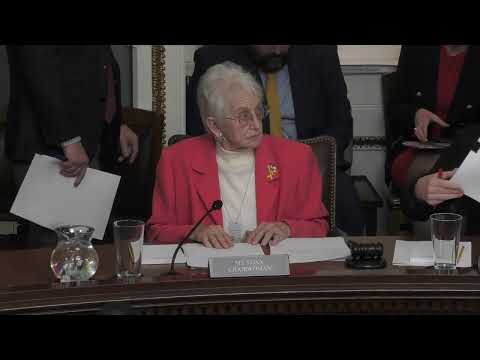
House Rules Committee clears closed rule to advance bill renaming Gulf of Mexico to ‘Gulf of America’
Summary
The House Committee on Rules voted to report a closed rule to advance H.R. 276, the Gulf of America Act, after testimony and partisan debate over costs, national symbolism and energy interests.
The House Committee on Rules voted to report a closed rule that would allow floor consideration of H.R. 276, the Gulf of America Act, a measure that would codify President Trump’s earlier renaming of the Gulf of Mexico to the “Gulf of America.” The committee accepted the rule by voice and recorded votes, sending the measure to the House floor under a closed rule that waives points of order, provides one hour of general debate, and allows one motion to recommit.
The measure drew sharply divergent testimony from members and witnesses about cost, historical precedent and what supporters described as symbolism tied to U.S. energy interests. Representative Hageman (Representative, Committee on Natural Resources; Chair, Subcommittee on Water, Wildlife and Fisheries) testified that “H.R. 276 will codify President Trump’s historic action to rename the Gulf of Mexico as the Gulf of America” and argued the change would ensure consistency “in references to laws, maps, regulations, and records of the United States.”
Supporters framed the bill as aligning place names with national interests and energy production. Representative Jack (Member, House) described the Gulf’s role in fishing and energy and said offshore production “accounts for about 15% of our oil and gas production in the country,” while committee witnesses cited industry figures showing roughly 1,800,000 barrels per day of production and Bureau of Ocean Energy Management (BOEM) estimates of 23,310,000,000 to 36,270,000,000 barrels of technically recoverable oil in the region. A 2021 report cited by a witness placed jobs tied to the Gulf oil-and-gas industry at about 412,000 with an average industry wage of roughly $69,650.
Opponents said the bill misplaces congressional priorities and could impose costs on local schools, libraries and municipalities. Representative Scanlon (Ranking Member, Committee on Rules) called the legislation “a stupid, unserious waste of time and taxpayer dollars” and said “Americans want us to work on real issues, not wasting time and money on bills that have no value.” Committee members discussed a Congressional Budget Office (CBO) estimate that updating federal maps and documents would cost less than $500,000 over five years, but members on both sides repeatedly said local printing and replacement costs for schools and localities were not captured fully by that figure.
Witnesses and members also raised ancillary issues during debate, including historical naming conventions, references to the Deepwater Horizon spill and questions about which levels of government would bear nonfederal replacement costs. Representative Griffith (Member, House) offered historical context on variant names used for the body of water, and Representative Scott (Member, House) and others tied the naming debate to broader discussions of energy policy and fisheries management.
Formal action on the measure occurred as part of a combined rule covering H.R. 276 and H.R. 881. The committee’s rule text, as announced by Representative Scott, waives points of order against consideration and provides limited debate time; the committee voted to table an appeal of the chair’s ruling on germaneness by a recorded tally of 9 yeas to 2 nays, and later approved the rule by recorded vote (9 yeas, 2 nays). The votes advance the bill to the House floor but do not themselves change statute.
The committee record includes extensive testimony and questioning; the committee accepted prepared statements for the record. The measure will now proceed to the House floor under the terms of the rule reported by the Committee on Rules.