Get Full Government Meeting Transcripts, Videos, & Alerts Forever!
Get email alerts on the Small Business Finance topic
No spam. Unsubscribe anytime.
House panel backs bill defining revenue‑based financing for small business
Summary
Chairman McFarland’s HB 470 creates statutory clarity for revenue‑based financing (a non‑recourse, revenue‑sharing funding model for small and medium businesses), defines the structure and encourages such funders to operate in Louisiana; committee reported the bill favorably.
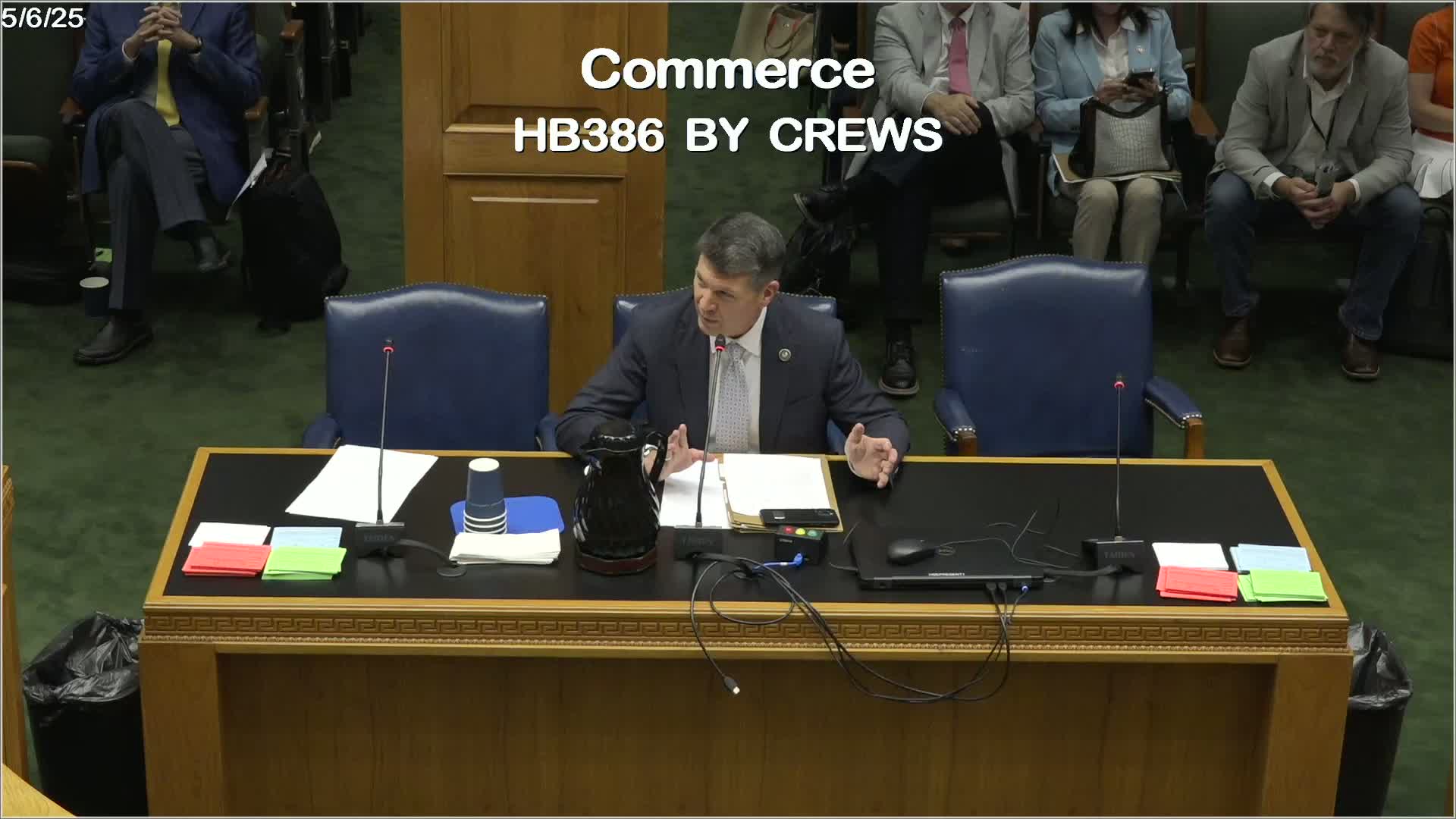
Representative Tanner McFarland described revenue‑based financing as an alternative to fixed monthly loans: a funder advances capital and receives a fixed percentage of future revenue until an agreed payoff amount is returned. McFarland told the committee his bill provides certainty and a uniform definition so lenders and borrowers can use revenue‑based financing without regulatory confusion.
Kate Fisher, an attorney who represents the Revenue‑Based Finance Coalition, explained that the product is similar to factoring but differs because it purchases a share of future revenue rather than an existing receivable. She said the agreements are generally non‑recourse — if a business fails the funder bears the loss — and providers undertake underwriting using bank statements, tax returns and other revenue indicators.
Supporters argued the model can expand capital for small businesses without equity dilution; committee members asked questions about consumer protections, contract terms and distinctions from factoring. The committee voted without objection to report the bill favorably.
Ending: The measure was reported favorably and will go to the House floor for further consideration; sponsors said they will continue outreach to local lenders and small‑business stakeholders.