Get Full Government Meeting Transcripts, Videos, & Alerts Forever!
Get email alerts on the Land Use Planning topic
No spam. Unsubscribe anytime.
Council adopts University Place subarea plan to guide redevelopment and traffic calming
Summary
The Lincoln City Council unanimously adopted the University Place subarea plan May 5, 2025, directing planning work and authorizing coordination with redevelopment tools including a blight study and potential TIF funding to support corridor improvements, housing, and historic preservation.
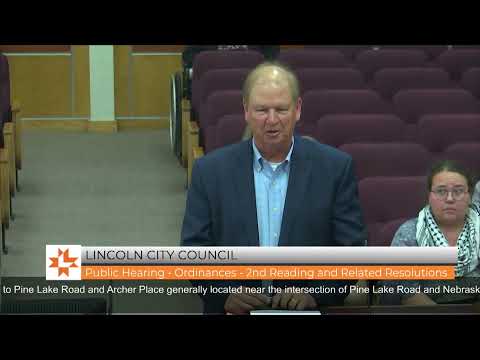
The Lincoln City Council on May 5 adopted the University Place subarea plan, a planning document intended to guide redevelopment, traffic-calming measures and historic‑preservation efforts in the University Place neighborhood in northeast Lincoln.
The plan — proposed by the Lincoln-Lancaster County Planning Department and described at the council meeting by Senior Planner Paul Barnes — concentrates on three priorities: a North 40th Street commercial corridor redesign (including lane reconfiguration and added on‑street parking), neighborhood revitalization tied to potential Tax Increment Financing projects and historic‑preservation measures such as a National Register or local landmark district.
Barnes told the council the planning effort began in early 2024 and included two in‑person open houses with more than 60 attendees each, a virtual open house, intercept surveys at neighborhood events, and focused outreach to Nebraska Wesleyan University students and staff. "We had a very engaged stakeholder committee," Barnes said, describing the public process used to identify needs such as traffic calming, more diverse commercial uses along North 40th Street and more quality, affordable housing.
Lindsay Clausen, owner of Archway Studios and a resident and business owner in the district, urged adoption, citing the neighborhood's small businesses and creative‑district identity. "The proposed traffic calming measures and the streetscaping are really vital for transforming this neighborhood into a creative arts destination," Clausen said.
Council members pressed staff on scope and timing. Councilman Dooden asked how much of the plan area lies in the floodplain; Barnes said portions along the western side are affected by Dead Man's Run and that planned watershed improvements should remove a substantial number of properties from the floodplain once completed. Several councilors also raised questions about the study boundary; Barnes said the boundary was set with stakeholder input and that outreach included adjacent institutions and destinations, but that expanding the boundary would increase the project's scope and resource needs.
Barnes said the subarea plan will be coordinated with the Urban Development Department’s blight and redevelopment study so recommendations can be carried into a redevelopment plan eligible for TIF funding. He also noted near‑term streetscape improvements being pursued with the creative district and that the city has applied for a Bloomberg grant to fund public art connecting Saint Paul Avenue to the Wesleyan campus.
The council voted 7–0 to adopt the amendment to the 2050 Lincoln‑Lancaster County Comprehensive Plan that adds the University Place subarea plan.
Council discussion and the department presentation made clear the plan is a policy and implementation framework rather than an immediate construction contract; specific projects, funding and design details will proceed through later design phases, funding approvals and, where required, separate permitting or redevelopment actions.
With adoption, the city will pursue the follow‑up actions described in the plan and coordinate with neighborhood stakeholders and other city departments to sequence traffic projects, preservation efforts and possible TIF‑eligible redevelopment.