Get Full Government Meeting Transcripts, Videos, & Alerts Forever!
Get email alerts on the Victim Compensation topic
No spam. Unsubscribe anytime.
CalVCB webinar summarizes application steps, documentation and benefit limits for victims
Summary
CalVCB outreach staff walked advocates through the victim compensation application, emphasizing the $70,000 overall cap, benefit-specific limits, required documentation for emergency awards, and preferred online filing at victims.ca.gov.
California Victim Compensation Board outreach staff led a statewide webinar on Aug. 20, 2025, explaining how victims and advocates should complete the CalVCB application, what documentation is required for emergency awards and routine claims, and how the program applies benefit limits. "Our overall benefit is 70,000," Outreach Specialist Cindy Kaiser told attendees, and she outlined several caps and procedural rules that affect eligibility and payment timing.
The guidance matters because CalVCB is often the payer of last resort for medical, mental-health and wage-loss expenses after crime; the rules determine whether victims, their family members or other derivative victims can receive help and how quickly funds can be delivered. Kaiser urged advocates to file applications promptly, saying, "So file the application today even if it doesn't terminate for 5 years or 7 years because there's a filing period right now."
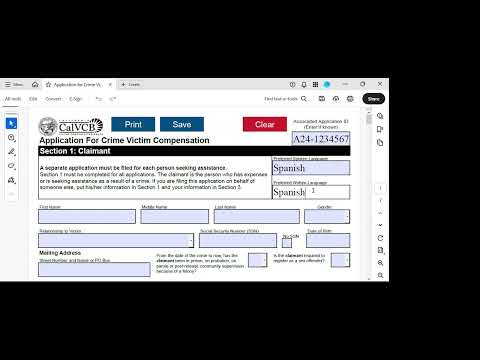
CalVCB recommends online filing, via victims.ca.gov, and says the online portal is the fastest way to create an account, upload documents and check application status. The outreach presentation explained that applicants may also mail, fax or hand-deliver a printed or fillable PDF application, but noted the online portal has features for uploading paperwork and secure messaging with CalVCB staff.
Kaiser reviewed the application structure and key data fields advocates must complete: claimant information (Section 1), crime-victim information (Section 2), parent/guardian or applicant details for minors or incompetent adults (Section 3), expense requests (Section 4), and crime documentation (Section 5). She emphasized that some missing fields — for example, Social Security number or date of birth when required for specific benefits — will halt processing and delay eligibility determinations.
On filing deadlines and eligibility, CalVCB staff explained the general filing period is seven years from the date of the incident or seven years from the date of discovery; minors have until their 20th birthday to file. Staff advised advocates to file even when a claimant is on a restricted status (probation, parole or certain registry requirements) because eligibility to pay expenses may begin when that status ends; CalVCB will check status with the Department of Justice and advise when benefits can start.
The webinar covered benefit limits within the $70,000 umbrella: medical and dental may be paid up to the full cap; mental-health treatment carries a $10,000 cap; residential security has a $1,000 cap; moving and relocation assistance is roughly $3,400; and wage-loss and loss-of-support claims can be paid up to $70,000. Kaiser noted that CalVCB will seek guidance from claimants about how to prioritize benefits, because paying large medical bills first can exhaust the total award and leave insufficient funds for wage loss.
Emergency awards were described as intended for urgent needs and generally processed within 30 calendar days when the applicant submits supporting documentation with the application. Kaiser said, "If it does come in without that support, the emergency award will be denied. Doesn't mean the application is denied. It just means it's gonna go this route instead of that route." For emergency funeral, relocation or medical needs, applicants must include contracts, receipts or a completed relocation packet with the application.
CalVCB staff explained payment procedures: although the program is commonly described as reimbursement-based, CalVCB can pay many providers directly to avoid out-of-pocket costs for victims. Kaiser said therapy, medical bills, relocation and funeral services can be billed directly to CalVCB if providers submit invoices and a W-9; providers are then paid at CalVCB's reduced rate and must accept that payment as payment in full.
On documentation and verification, staff said law-enforcement reports are strongly weighted but not the only acceptable evidence. Restraining-order filings, victim-witness or domestic-violence shelter letters, human-trafficking caseworker affidavits and medical or therapy records can be used where appropriate. For human-trafficking claims, Kaiser said enrollment in a program alone is often insufficient and an affidavit or law-enforcement report describing the incident usually is required.
Insurance and other recovery sources were repeatedly emphasized: CalVCB is the payer of last resort and requires claimants to identify insurance (health, dental, auto, workers' compensation, Medi-Cal/Medicare) and to provide explanation-of-benefits or declaration pages when available. Kaiser said that when other recovery sources exist — such as insurance, restitution or civil settlements — CalVCB will pursue reimbursement for amounts the program paid.
Staff addressed several special cases: minor witnesses (limited therapy benefit of $5,000 unless they can be classified as direct victims), victims who are homeless (CalVCB needs a reliable mailing address and suggested options such as general-delivery mail, an advocate's office or a community-based organization address), and victims who live with perpetrators (the program is confidential and victims are not required to use an abuser's insurance provider). CalVCB also noted it will not contact or notify suspects about applications.
Kaiser said processing times depend on how complete the application is; she reported a current average of about 39 days for eligibility determination but cautioned that missing documentation or verification requests can lengthen processing. Language access was noted: CalVCB maintains written materials in 13 languages in addition to English and uses language-assistance vendors when materials are not already translated.
Representatives such as advocates, family members or attorneys can be designated on applications. CalVCB distinguishes attorneys (who may request a statutory fee subject to limits) from other representatives; when an attorney represents a claimant, correspondence may be routed to the attorney. Advocates and other nonattorney representatives may call for status updates once they are designated and the representative section is signed.
Kaiser closed by directing advocates to the CalVCB website for the benefit reference guide, the human-trafficking wage-compensation form, presentation-request forms and other resource materials, and by encouraging providers and advocates to request a presentation for their agencies. "If you haven't taken the overview, please, when you can," she said, and asked attendees to use victims.ca.gov for filing and status checks.
For more information or to submit an application, CalVCB directs users to victims.ca.gov and to its customer-service contacts listed on the application and website.