Get Full Government Meeting Transcripts, Videos, & Alerts Forever!
Get email alerts on the Childcare Kindergarten Daycare topic
No spam. Unsubscribe anytime.
Planning board divided on Alibaba Avenue kindergarten/daycare; special‑exception denial motion fails and development agreement considered for commission
Summary
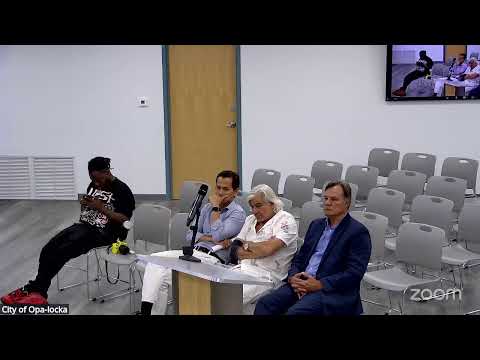
A plan to convert seven existing buildings on Alibaba Avenue into a kindergarten/daycare drew sustained public comment and a divided board at the City of Opelika Planning and Zoning Board meeting.
A plan to convert seven existing buildings on Alibaba Avenue into a kindergarten/daycare and educational facility drew substantial public comment and partisan board debate at the City of Opelika Planning and Zoning Board meeting.
Applicant representatives, including former Miami‑Dade fire chief Al Cruz and owner Felipe (presenting as an operator of multiple schools), said the project would repurpose two existing commercial structures and a former church into educational space for up to 39 children. Cruz said the project would be “fully sprinkler[ed] with fire alarm and all of their codes that are required in the state of Florida and the city of Opelika” and would provide a playground area larger than minimum requirements.
Gerald Lee, planner with the City of Opelika, told the board the use is evaluated under the city’s school‑location rules (ordinance 10‑16) and the Historic Downtown Opelika District ordinance (22‑08). Staff recommended approval of the special exception on the basis that the use fits the zoning district, meets play‑area requirements and is adequately served by public services; Lee said the proposal would unify seven parcels into a single site of about 26,387 square feet and that the buildings would be retrofitted rather than newly constructed.
Multiple teachers and the principal from Dr. Robert B. Ingram Elementary spoke during public comment, raising traffic, enrollment and noise concerns. Sarah Allen, a third‑grade teacher at Dr. Robert B. Ingram, asked how the private facility would affect the elementary school and whether public‑school funding or enrollment would be diverted. “Will funds be diverted from my, Dr. Robert B. Ingram school to now a private school?” she asked. Principal Dr. Cynthia Clay said the elementary already offers summer and after‑school programs and asked whether the operator planned to expand into higher grades; staff responded the site’s zoning and square footage limit the operation to kindergarten and pre‑K.
Several commenters and board members raised safety and noise issues because a rail line runs immediately behind the site. Commenters and staff noted train noise is frequent in the corridor; the applicant said interior acoustic treatment and compliance checks (required by some funding partners) would be used to measure and address sound levels.
Board members expressed concerns focused on traffic/parking and potential impacts on the adjacent elementary school. A motion to deny the special exception was made and seconded; during roll call several members cited criteria 6 (vehicular traffic/circulation) and criterion 8 (unfavorable environmental impacts) among reasons for denial. The clerk recorded votes in favor of the denial motion by several members, but the board announced that the “item did not pass.” The chair and staff then moved to take up the related development agreement (resolution 4). The public and board discussed that any changes the board wants to see could be addressed in the development agreement, but staff cautioned some provisions are only encouragements and not enforceable.
A separate motion to deny the development agreement was also made and seconded; roll call votes were recorded. Staff noted that, despite board action, both the special‑exception application and the related development agreement will proceed to the city commission for consideration.
The item generated the meeting’s most extensive public engagement: multiple teachers and the principal, several board members and the applicant discussed traffic flow, age separation on playgrounds, licensing and funding sources (Early Learning Coalition, Step Up for Students, United Way) for pre‑K and kindergarten operations. Staff emphasized the board must base any denial on the specific approval criteria in the city code and asked members to cite those criteria when making a motion.