Get Full Government Meeting Transcripts, Videos, & Alerts Forever!
Get email alerts on the Affordable Housing topic
No spam. Unsubscribe anytime.
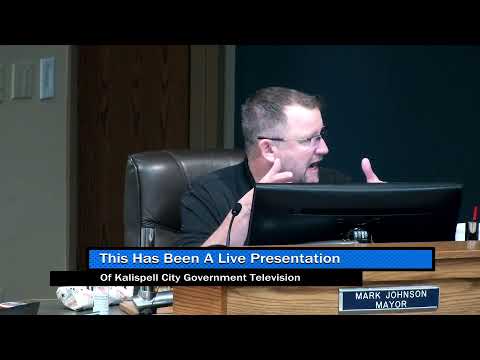
Council debates housing plan, staff support and partnering options to accelerate affordable housing
Summary
At the budget workshop councilmembers and staff discussed creating a housing plan, dedicating staff time or a coordinator, partnering with nonprofits or a housing authority, using impact fees, TIF and grants, and conducting a land inventory to advance affordable housing projects.
Kalispell City Council and staff discussed a multi-part approach to affordable housing that would combine planning, staffing and partnerships rather than relying on a single solution.
Staff and councilmembers debated whether the city should create its own housing authority or instead partner with nonprofits and developers. Options raised included dedicating a staff person to coordinate tax-credit applications and project development, conducting a city land inventory, using impact fees and tax-increment financing (TIF) where appropriate, and pursuing grants and state or federal funding. Councilmembers emphasized that such work requires substantial staff time and that partnering with an experienced nonprofit or developer could reduce the city’s operational burden.
Council discussion covered both planning and implementation. Participants described a two-part approach: (1) update or complete a housing needs assessment and development plan that identifies unit types and quantities needed, and (2) pursue implementation tools—land assembly, tax credits, developer partnerships, TIF, and impact-fee adjustments—to create or preserve affordable units. Staff noted that moving from planning to project delivery would require either a dedicated staff role or active third-party partners to prepare complex funding applications such as tax-credit applications.
Councilmembers asked staff to bring back clearer options and supporting documentation for a future session so the council can weigh which tools to use and how much staff time or city funding would be needed. The city suggested working with the existing housing and homeless advisory committee and said it would continue to explore grant opportunities, tax-credit partnerships, and the feasibility of city-led acquisition or proactive outreach to developers.
No vote or ordinance establishing a housing authority or committing city dollars for acquisition occurred at the workshop; council discussion produced direction to staff to compile options and to engage advisory bodies for further review.