Get Full Government Meeting Transcripts, Videos, & Alerts Forever!
Get email alerts on the Roofing topic
No spam. Unsubscribe anytime.
Commission approves copper standing‑seam roof on portion of historic house to address recurring snow/ice damage
Summary
The commission voted to allow a copper standing‑seam roof on a portion of a historic house after the applicant said repeated snow and ice sliding from higher slate peaks caused wood rot; the motion preserves existing slate on upper roofs and applies copper only on a lower, limited area.
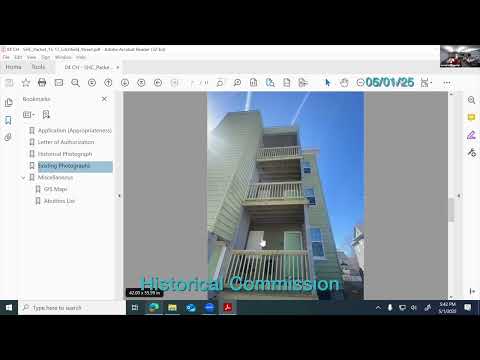
The Springfield Historic Commission voted to approve a copper standing‑seam roof on parts of a house recorded in the meeting as 29 English Railroad after the property owner explained that decades of snow and ice sliding from higher slate peaks had caused recurring wood rot on a lower, low‑slope porch roof.
The applicant told commissioners that the house’s upper roofs would retain their original slate, and that copper standing‑seam roofing would be installed only on a lower, limited area (the sleeping porch) that has previously been covered with asphalt shingles and had repeatedly suffered rot due to racking snow. The owner said the copper would encourage snow to shed earlier (and more safely) than asphalt and that reproducing copper valleys and replacing aluminum flashings with copper would also reduce corrosion at interfaces.
Commissioners and public commenters cited preservation context and looked for precedents in the city. A public commenter noted other local examples where standing‑seam roofs had been used and said the proposed work would remove asphalt and replace it with a material compatible in appearance and period appropriateness. One commissioner asked about snow guards and where sliding snow would land; the applicant answered that snow guards had been considered but that the project design aims to direct snow away from pedestrian areas and vehicle parking.
After public comment in favor, the commission voted to approve the application as presented, noting that slate would remain on the principal roof and copper would be limited to the described porch area. The commission recorded a standard motion to accept the application and directed the applicant to submit any additional detail requests and to return if the scope expands.
Why it matters: The decision balances preservation of original slate on major roof surfaces with a targeted material change to a limited, low‑visibility portion to address structural deterioration and recurring maintenance problems caused by snow and ice.
Next steps: Applicant to provide final shop drawings and notifications to staff; if details change or additional visible areas require copper, the applicant must return to the commission for review.