Get Full Government Meeting Transcripts, Videos, & Alerts Forever!
Get email alerts on the Historic‑preservation topic
No spam. Unsubscribe anytime.
Historic commission approves post‑work rear porch repairs after vendor did work without permit
Summary
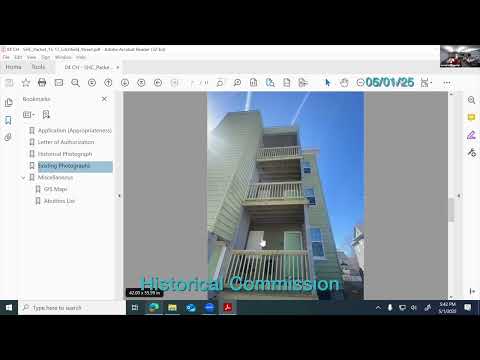
The Springfield Historic Commission voted to issue a certificate of appropriateness for rear‑porch repairs at the property cited as 1519 Richfield Street after a management representative said repairs had been completed earlier for safety reasons and an on‑site building inspector had viewed the work.
The Springfield Historic Commission voted to issue a certificate of appropriateness for repairs made to the rear porch at the property cited in the hearing as 1519 Richfield Street after a representative for the property’s management said emergency repairs had already been completed because the porch presented a safety hazard.
The certificate followed testimony by a property-management representative who said the vendor performed repairs before the commission review because the porch was “super dangerous” and the owner lives out of state. The representative said the company is seeking the commission’s approval so the building department can complete permitting. The commission recorded a vote in favor of issuing the certificate after commissioners said they would accept the work on the basis of what is visible from the public way and because an inspector had visited the site during repairs, according to meeting remarks.
The exchange focused on two questions: whether the decking installed was like‑for‑like with historically appropriate material, and whether the installed boards had been pressure treated prior to replacement. Commissioners asked staff for documentation showing whether the previous decking was pressure treated because that fact would change how strictly the commission applies material‑matching standards. Management representatives said they had no documentation and that the vendor and an on‑site inspector had accepted the work.
Commissioners also criticized the practice of performing work without first obtaining a permit. At least one commissioner said a licensed contractor “should never be doing a job without a permit.” The management representative said the company understood the correct process going forward and pledged to involve the building department and the commission before future work.
The commission asked staff to provide a certificate (the commission’s formal sign‑off) so the building department could complete its paperwork; the applicant’s representative said she would deliver the certificate the following day.
What happened next: commissioners voted to approve the certificate as presented. The record indicates the commission’s vote was unanimous among members present. The commission also noted that if additional exterior work is proposed or if documentation about prior pressure treatment emerges, the applicant must return to the commission for review.
Why it matters: The case underscores recurring tensions between urgent safety repairs and historic‑district permitting requirements. Commissioners said they will allow limited remediation when a structure is unsafe but reiterated that property managers and contractors must follow the commission and building‑department processes in advance when possible.
The commission’s action included an instruction to staff to issue the certificate for the property so the building department could complete its review; the management representative said she would deliver the certificate to the building department the next morning.
The commission moved on to subsequent agenda items.