House subcommittee hearing spotlights ‘marriage penalties’ and tenure limits in housing assistance
Get AI-powered insights, summaries, and transcripts
SubscribeSummary
Witnesses and members debated whether federal housing assistance discourages marriage and long-term exits from subsidy, with former HUD Secretary Benjamin Carson and AEI senior fellow Howard Husock urging reforms such as time limits and escrowed earnings while other witnesses and members warned that deep cuts would harm families.
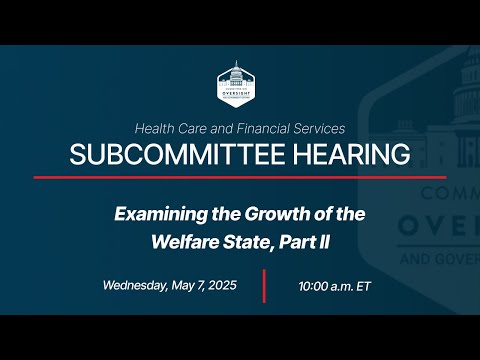
WASHINGTON — Members of the House Committee on Oversight and Reform’s Subcommittee on Health Care and Financial Services and four expert witnesses debated whether federal housing and other basic‑needs programs create disincentives to marriage and work and discussed possible reforms during a hearing focused on the growth of the welfare state.
The hearing, chaired by Rep. Glenn Grothman, opened with testimony from Benjamin Carson Sr., the former secretary of the U.S. Department of Housing and Urban Development and chairman of the American Cornerstone Institute, who argued that housing assistance contains a “marriage penalty” that discourages family formation. “The so called marriage penalty embedded in assistance programs creates a tangible disincentive to family formation,” Carson testified, saying that when two adults marry their combined incomes can make them ineligible for vouchers or raise rent contributions.
Why it matters: Members and witnesses framed the issue as both a fiscal and social concern. Proponents of change said long tenures on subsidies and rules that tie benefits to household income can trap families in dependency and reduce turnover for those on waiting lists; opponents warned that major funding cuts or strict time limits would immediately harm vulnerable households who rely on SNAP, Medicaid and housing assistance.
Carson and Howard Husock, a senior fellow in domestic policy studies at the American Enterprise Institute, pressed for policy changes aimed at shortening average stays and encouraging exits. Husock urged alignment of housing rules with cash welfare limits established by the 1996 Personal Responsibility and Work Opportunity Reconciliation Act, saying, “A 5 year limit, as with TANF, makes sense.” He recommended replacing the current 30‑percent rent rule with a system that places increases in an escrow account to be used for down payments or exit supports, and he said local uses of HUD’s Rental Assistance Demonstration (RAD) that depend on long‑term voucher guarantees should be accounted for when applying time limits.
Witnesses offering a different direction argued for strengthening — not slashing — basic needs programs. Indivar Dutta‑Gupta, an adviser to Community Change and a Doris Duke distinguished visiting fellow at Georgetown University’s McCourt School of Public Policy, called these programs “essential components of a social protection system” and urged expanding supports and removing administrative barriers such as asset limits rather than imposing sweeping cuts.
Members expressed sharp differences. Ranking Member Krista Morphy recounted her family’s experience with the safety net and warned that deep budget cuts would be “catastrophic,” while Rep. Jared Huffman (participating in questioning) and others described local programs that they said stabilize families and improve outcomes for children.
Key details and context: Witnesses and members cited several data points during the hearing: - The panel discussed HUD and voucher program workloads and durations: witnesses said the average Section 8 voucher recipient spends about 10 years on the program and the average public housing tenant about 12 years; Husock cited unpublished AEI/University of Chicago research projecting that roughly 87% of current voucher recipients (excluding elderly and disabled) will likely spend more than five years in subsidized housing and 73% more than 10 years. - Witnesses referenced widely used policy mechanisms: Section 8 vouchers, the Low‑Income Housing Tax Credit (LIHTC or Section 42), Rental Assistance Demonstration (RAD), and TANF (cash welfare with a five‑year limit implemented in 1996). - Examples of misuse or corruption were raised: Grothman referenced a Milwaukee Housing Authority report of approximately $2.8 million in alleged misuse of federal funds; Husock referenced a New York City public‑housing corruption case in which employees accepted cash from contractors.
Discussion vs. action: The hearing produced no formal votes or committee actions. Members and witnesses offered policy proposals and critiques but did not adopt legislation. Suggested directions from witnesses included testing time limits for nonelderly, nondisabled new tenants, escrowed earnings for families whose incomes rise, and prioritizing U.S. citizens and legal immigrants for scarce assistance — recommendations framed as proposals for congressional or department rulemaking rather than immediate committee decisions.
What they said (selected direct quotes from witnesses): - Benjamin Carson Sr.: “The so called marriage penalty embedded in assistance programs creates a tangible disincentive to family formation.” - Howard Husock: “A 5 year limit, as with TANF, makes sense.” - Indivar Dutta‑Gupta: “Instead of cutting vital services like health care, food assistance, and childcare, Congress should improve their effectiveness by expanding them and removing burdens like asset limits that hold people back.”
Closing and next steps: Chair Grothman closed the hearing by inviting members to submit additional questions and materials for the record. No formal recommendations were adopted at the session; committee members signaled sharply different policy priorities and suggested further legislative and oversight work would follow.