Get Full Government Meeting Transcripts, Videos, & Alerts Forever!
Get email alerts on the County Budget topic
No spam. Unsubscribe anytime.
Goochland finance committee hears $16.5 million year-to-date surplus, debates simpler policy text and later budget deadline
Summary
Committee heard third-quarter projections showing roughly $8.7 million more revenue than budgeted and a projected $16.5 million surplus, reviewed a citizen-drafted simplified financial policy, and discussed shifting the county's budget-adoption timing to mid/late May with tax-billing implications.
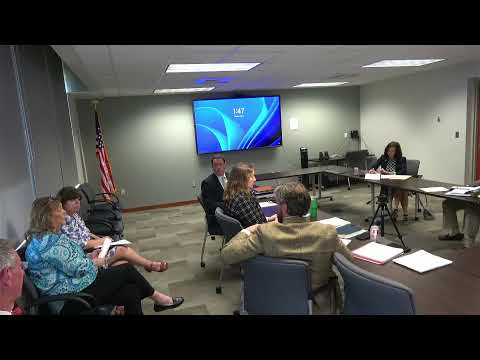
Goochland County's Finance and Audit Committee on an administrative meeting day heard third-quarter projections indicating about $8.7 million more revenue than budgeted and a projected year-end surplus of roughly $16.5 million, and discussed revisions to the county's Financial Management Policies and the timing of the annual budget-adoption process.
The projections were presented by Emily Dave, a county finance presenter. "we're gonna come out about $8,700,000 higher than we budgeted," Dave said, citing roughly $4,000,000 from higher-than-anticipated building permit fees related to commercial development and Project Rocky (now identified in discussion as Amazon), and another roughly $4,000,000 from personal property collections. She said interest income remained stronger than expected and EMS cost-recovery receipts were higher after a FY24 lag caused by a vendor security breach. "After our actual revenues at a hundred and 5,000,000 and our actual expenditures at 89,000,000, we've got a a surplus of 16 and a half million," Dave said. She added the county currently expects to return about $8,900,000 to the general fund balance.
Why it matters: the committee noted those excess revenues feed planned capital and service programs. Dave cautioned that some increases are one-time (for example, pulled-forward permit fees) and that the county typically funds the CIP and CSA programs from year-end funds rather than treating them as recurring revenue.
Committee members and staff pressed on drivers and next steps. A member asked whether the higher building permit fees were a timing pull-forward or a sustainable trend; Dave said they stemmed from more activity than expected and that Project Rocky was not captured in the adopted budget because the county could not confirm it at that time. The committee agreed staff should examine how those higher fees should be treated in the FY2025-26 budget and consider adjustments so one-time receipts do not create inflated recurring projections.
The committee also reviewed a citizen-drafted rewrite of the county's Financial Management Policies. Mr. Lyle, an audience member who prepared a simplified draft, told the committee, "Clarity is what I was hoping for," and said examples and charts help translate reserve percentages into concrete dollar amounts for readers. Committee members generally welcomed the effort but debated format: whether to include hard numerical charts in the policy text or put illustrative charts in an appendix or separate report to avoid annual policy edits. One board member noted policy No. 5 on operating budget monitoring belongs in a budget-monitoring document rather than in the policy itself; another emphasized that examples could be used without requiring annual policy changes.
Discussion from the floor produced a plan to reconcile wording and presentation: staff will compare Mr. Lyle's draft with the existing policy, incorporate clarifying examples or appendices as appropriate, and circulate an updated draft to the board ahead of the next meeting. The committee said it would attempt to keep the policy readable for residents and staff without embedding figures that must change yearly.
Members also discussed moving the county's budget-adoption deadline later, to mid-to-late May, so the county can better align pay and human-capital decisions with regional market changes. "One of the reasons why we adopt our budget when we do is because the treasurer and the commissioner of revenue were waiting the tax rates in order to get the tax bills out in time to be paid in June. June fifth," said Chairman Bautner, noting that later adoption could force changes to billing due dates and create short-term cash-flow effects. Staff and other members said the county could consider breaking out the tax rate approval earlier or holding a dedicated tax-rate discussion in March or April to avoid delaying the tax-billing schedule. The committee agreed to continue the timing conversation at upcoming 2-by-2 meetings and with staff, recognizing any later adoption might require coordination with the treasurer and the commissioner of revenue and could affect tax-billing and collection schedules.
Public commenters briefly praised the committee's effort to simplify materials for lay readers. One public commenter called the simplified packet "budget for dummies," thanking the committee for a more readable document.
No formal policy changes or budget decisions were adopted at the meeting. The committee approved routine minutes for the Feb. 4, 2025 meeting by voice vote and adjourned; members asked staff to return updated policy and budget-timing drafts at a future meeting. The board scheduled a Finance and Audit Committee meeting for Aug. 5, 2025.