Get Full Government Meeting Transcripts, Videos, & Alerts Forever!
Get email alerts on the Council Rules Draft topic
No spam. Unsubscribe anytime.
Staff presents draft revisions to Evanston council rules; committee begins review
Summary
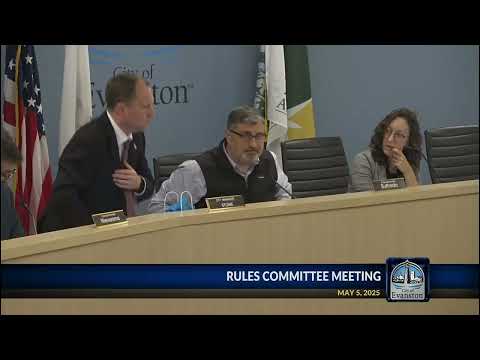
City staff presented a reorganized draft of the Evanston City Council rules to the Rules Committee on May 5 that would reorganize existing provisions, clarify conflicts-of-interest language, add procedures for agenda and consent items and adjust several parliamentary rules.
City legislative staff presented a reorganized draft of the Evanston City Council rules to the Rules Committee on May 5 and the committee began a section-by-section review, flagging items for follow-up before adoption.
The draft aims to reorganize and clarify existing rules, resolve inconsistencies with city code and the Illinois Open Meetings Act and make targeted procedural changes—especially around agenda posting, the consent agenda, mayoral voting, conflict-of-interest language, amendments to ordinance text and committee terms. Liza Robertson Young, the city’s chief legislative policy advisor, led the presentation.
Robertson Young said the three primary objectives of the draft are to make the rules legible and procedurally sensible, to resolve internal inconsistencies and conflict with code, and to adopt modest substantive changes that smooth meeting operations. She noted the existing rules are arranged alphabetically, which can make on-the-spot parliamentary interpretation difficult, and said staff modeled many changes on practices used by other municipalities.
Key substantive changes highlighted in the draft included: - Mayoral voting (rule 2.a.4.a): the draft clarifies what happens when council votes fall short of the five votes needed for most ordinances and explains mayoral participation in those circumstances; staff said the proposed language aligns with city code 16-32. - Conflicts of interest (rule 2.f): the draft expands the conflicts definition beyond strictly financial interests to include personal, family or other economic interests and adds a process for determining recusal and whether a conflicted member counts toward a quorum. - Agenda posting and items for consideration (section 4): the draft reiterates the Open Meetings Act 48-hour posting requirement for the packet and introduces a new “items for consideration” section for matters expected to require discussion; it also allows technical corrections after posting but requires substantive additions to wait for a later posted meeting. - Consent agenda procedure (section 5.h): the draft allows removal of items from consent up to 24 hours prior to the meeting without disrupting staff planning, and requires a second for last-minute removals made during a meeting. - Parliamentary procedure (section 6): the draft standardizes motions and proposes an appendix “cheat sheet” for quick reference; it distinguishes technical vs. substantive amendments and would require substantive amendments to be posted and considered at a later meeting to comply with the Open Meetings Act. - Committee terms (section 7): proposal to change standing-committee chair terms from three months to six months and to return Planning & Development from seven to five council members (the prior configuration).
Committee members questioned several items during the presentation. Council member Rogers and others asked clarifying questions about the proposed mayoral-vote language and whether the draft removes or changes scenarios in which the mayor may vote. Members repeatedly flagged areas where city code already prescribes appointment or chair procedures and asked staff to compile a matrix showing where code controls, where rules control and where ordinance changes would be required.
Committee members and staff agreed on a feedback process: staff will post the draft in a shared document and committee members will submit line edits and comments. Staff proposed a one-week turnaround for initial comments; members asked for two weeks in some cases. The committee set a schedule to collect written feedback, ask staff to prepare an updated draft that groups straightforward edits and flags items requiring policy-level decisions, and to reconvene for further deliberation. The committee aimed for substantive adoption at a near-term meeting if consensus emerges from the written review and staff revisions.
No final vote was taken on the draft rule text at the May 5 meeting; staff and the rules committee agreed to a collaborative review process to resolve outstanding questions before any motion to adopt.