Get Full Government Meeting Transcripts, Videos, & Alerts Forever!
Get email alerts on the City Manager Evaluation topic
No spam. Unsubscribe anytime.
Rules Committee sets timeline for city manager evaluation and quarterly check-ins
Summary
The Rules Committee agreed on a timeline to adopt council goals, produce a manager work plan and hold quarterly check-ins with a larger annual evaluation timed to align with budget planning.
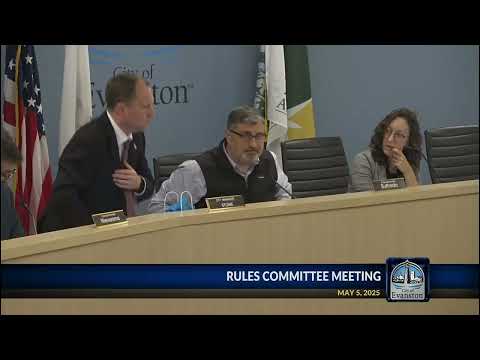
The Evanston Rules Committee on May 5 discussed and agreed on a timeline for the city manager evaluation process, directing staff and council to adopt council goals and to use regular check-ins tied to quarterly calendar dates.
The decision matters because it establishes how and when the council will review the city manager’s performance and link that review to budget and compensation decisions.
Council members supported a structured approach: adopt council goals as soon as feasible, direct the city manager to produce a measurable work plan based on those goals, and hold periodic check-ins. Committee members proposed quarterly reviews timed near standard fiscal planning cycles so progress can inform budget-year compensation decisions. Several council members suggested quarterly check-ins at the ends of calendar quarters (end of March, June, Sept., Dec.), with a substantive annual review in late summer or early fall to align for budget considerations.
City Manager Stowe noted his employment anniversary is Aug. 16 and said staff could provide quarterly reports in alignment with council goals once the goals are finalized. Committee members agreed that the rules committee or council should finalize goals promptly — staff had planned goal-setting work for the June meetings — and then allow 30 days for staff to develop a manager work plan tied to those goals. The committee generally agreed that an initial major evaluation would occur in late September, with interim check-ins that would bring the council back toward the manager’s anniversary date in future years.
Members asked staff to prepare a calendar of proposed evaluation checkpoints tied to council-goal adoption and the budget calendar and to return results and proposed dates to the rules committee for confirmation.
No formal vote was required on the timeline itself; the committee adopted the timeline by consensus and set expectations for staff follow-up.