Get Full Government Meeting Transcripts, Videos, & Alerts Forever!
Get email alerts on the Referrals Legislative Process topic
No spam. Unsubscribe anytime.
Evanston rolls out written referral process and tracking for council legislative ideas
Summary
City staff described a written referrals process intended to make council-originated legislative ideas more transparent and trackable: an online referral form, two co-referrers required, distribution to all council members, and a referrals committee that recommends routing to boards, committees or standing committees.
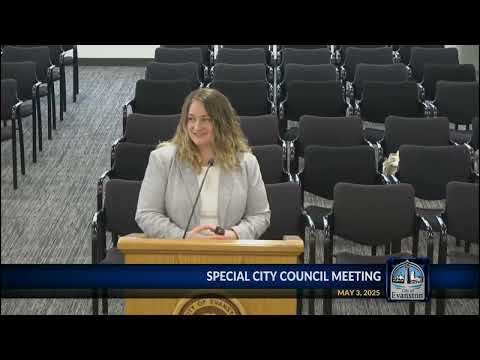
Lisonbee Leipziger, policy and intergovernmental affairs manager, walked council members through a standardized, written referrals process the city uses to track legislative ideas from council members and route them through committees, boards or council consideration.
Leipziger said the process uses a single online form (staff currently use Formstack) that requires a primary referrer and two co-referrers. Submissions are now distributed to all council members so everyone is aware if a referral is filed under a member’s name. The referrals committee meets roughly 15 minutes before Administration & Public Works and will recommend that items be sent to either a board, commission or standing committee; ordinances require two hearings while resolutions are heard once.
Why it matters: The change aims to create a public, written record for council referrals (previously many were made verbally during Call of the Wards), reduce confusion about status and timing, and help staff prioritize workload.
Details and practice points
- Single-link form and distribution: Leipziger said the same online link is used by council members to submit referrals; the city added all council members to the distribution list so each referral emailed to staff is visible to all council members.
- Co-referrers and staff help: Staff can prepare referral forms at a council member’s request if the referrer emails and cc’s desired co-referrers; the form traditionally asks the referrer to identify two co-referrers.
- Committee routing and timing: The referrals committee generally meets about 15 minutes before APW and responds to the primary referrer about where staff plan to place the item. If referred to a standing committee, the committee chair is asked to respond within a week (a council rule that may be revisited by the rules committee).
- Ordinances vs. resolutions: Leipziger reiterated that ordinances, per city practice, are heard twice (introduction and final action); resolutions are heard once.
Council concerns and follow-up
Council members asked for clearer definitions of what constitutes a “legislative idea” versus an administrative request, a public-facing dashboard so residents can see the status of items in the “hopper,” and more precise timelines for committee responses. Clerk Mendoza and staff said a full legislative management system that would provide public dashboards exists (software like iCompass/Legistar) but would require a budgetary investment beyond the city’s current agenda system.
Ending
Staff said they can change tools or workflows if the council directs them to pursue a formal legislative-tracking system; in the meantime the written referral form and expanded notification are active. Leipziger asked council members to work with committee chairs and BCC members to reduce surprises and to show up for committee hearings where they want legislation discussed.