Get Full Government Meeting Transcripts, Videos, & Alerts Forever!
Get email alerts on the Legal Profession Honors topic
No spam. Unsubscribe anytime.
Alabama Lawyers Hall of Fame adds five inductees, bringing membership to 100
Summary
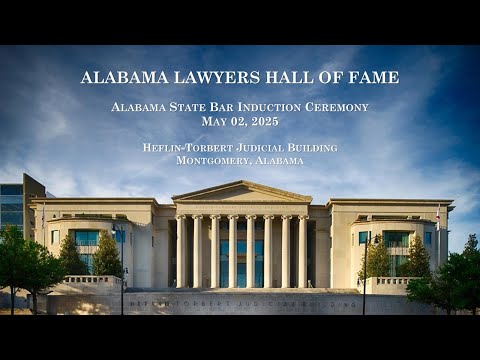
The Alabama Lawyers Hall of Fame inducted five attorneys at a 2025 ceremony at the Heflin Torbert Judicial Building, bringing the group’s total membership to 100.
The Alabama Lawyers Hall of Fame inducted five attorneys at a 2025 ceremony at the Heflin Torbert Judicial Building, bringing the group’s total membership to 100. Sam Rumor, chairman of the Lawyers Hall of Fame committee, opened the ceremony and explained the selection process and committee composition.
The honors recognized a mix of law professors, trial lawyers, judges and a 19th‑century federal judge. Chief Justice Sarah Stewart of the Supreme Court of Alabama delivered welcoming remarks, urging attendees to remember the inductees’ example: “their contributions matter, and not just the cases that they heard or the rulings they issued, but in the example they have set for generations of legal professionals.”
Nut graf: The five inductees span Alabama legal history and public service. The honorees cited at the event were Camille Wright Cook (legal educator and the University of Alabama’s first tenured female law professor), James O’Haley (trial lawyer, judge and teacher), George Washington Lane (a 19th‑century federal judge and noted Unionist during the Civil War era), Alexander Worthy “Alec” Newton (prominent plaintiff’s trial lawyer and legal civic leader), and Lewis Charles Wright (longtime judge on the Alabama Court of Civil Appeals). The committee said one inductee must have been deceased at least 100 years and all nominees must have been deceased at least two years.
Camille Wright Cook: The citation read by former Alabama State Bar president Cootscale described Cook as a legal educator for more than 45 years who served at Auburn University and the University of Alabama School of Law. The committee noted she became the first woman to receive tenure in the law school and the first to hold an endowed professorship there, and that she helped lead adoption of a mandatory continuing legal education requirement for members of the Alabama State Bar. Accepting for the family, granddaughter Cammie Cook recalled her grandmother’s encouragement and quoted a lesson Cook often gave: “a law degree was the best education you could receive.”
James O’Haley: Wendy Crew read a citation tracing O’Haley’s rise from clerk to leading civil trial lawyer, his service in World War II, and later appointment in 1968 to the Jefferson County Circuit Court bench by Governor Albert Brewer. Family member Toby Dykes accepted the plaque and recounted personal memories and advice from his grandfather, including the admonition to be prepared: “you can control whether or not you’re the most prepared lawyer in the courtroom.”
George Washington Lane: The ceremony included a special category for attorneys deceased at least 100 years. The citation described Lane’s 19th‑century biography: admitted to the bar in 1826, service as a state legislator and judge, a federal district court appointment during the secession era, his manumission of enslaved people, and his loyalty to the Union during the Civil War. The citation said Lane received a recess appointment from President Buchanan that was carried over and confirmed by President Lincoln; a representative of the Madison County bar commissioners accepted the plaque on Lane’s behalf.
Alexander Worthy “Alec” Newton and Lewis Charles Wright: Newton’s citation recounted his record as a plaintiffs’ trial lawyer with multiple million‑dollar verdicts, leadership roles in trial advocacy organizations and civic involvement in Birmingham. His daughter Kelly Hammond accepted the plaque. Tim Lewis read the citation for Lewis Charles Wright, noting Wright’s long service on the Alabama Court of Civil Appeals (1969–1987), his role as presiding judge and his authorship of nearly 2,000 opinions; Dennis Wright accepted for the family. Lewis Charles Wright’s citation also summarized his World War II naval service and earlier elected roles.
No committee motions, votes or policy changes were made at the ceremony; the event consisted of citations and family acceptances. Sam Rumor reminded attendees that full citations would be posted on the Alabama State Bar’s website and that plaques for the Hall of Fame are located in the lower rotunda of the Heflin Torbert Judicial Building.
Ending: The ceremony concluded with a note about a luncheon and a request that families assemble for photographs; the committee also signaled it would meet after the luncheon to begin selection for next year’s inductee.