Get Full Government Meeting Transcripts, Videos, & Alerts Forever!
Get email alerts on the Ethics topic
No spam. Unsubscribe anytime.
City attorney briefs DRB on new Vermont municipal code of ethics; recusal rules and seeking counsel explained
Summary
City Attorney Colin McNeil and Planning Director Paul Connor summarized the new Vermont municipal code of ethics for the DRB, explained recusal standards and good‑cause exceptions, and told members to contact local counsel while the Vermont State Ethics Commission has suspended municipal advisory services.
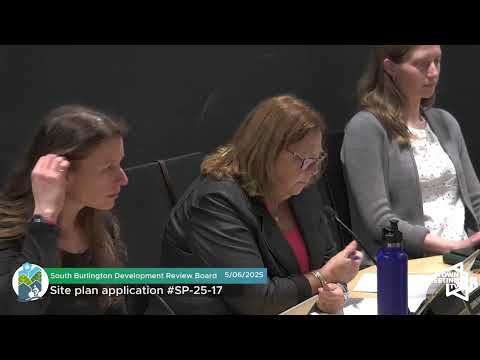
South Burlington, Vt. — City Attorney Colin McNeil and Planning Director Paul Connor briefed the Development Review Board on Vermont’s municipal code of ethics during the May 6 meeting, reviewing when board members must recuse themselves, how to document a recusal and where to seek confidential guidance.
McNeil told the board that the statute and implementing code define a conflict of interest as an officer’s interest in the outcome of a matter that conflicts with the proper discharge of the officer’s duties and said the standard for appearance of conflict is judged by a reasonable‑person test with knowledge of relevant facts. “If you have a conflict of interest, which is, as I explained it, your own interest, you need to recuse yourself,” McNeil said.
Paul Connor emphasized the statute’s practical context for small communities: many board members will know applicants or consultants in a tight social and professional network, and not every personal connection creates a disqualifying conflict. But the code is stricter than South Burlington’s prior local policy: previously, a member could remain at the table after disclosing a potential conflict by asserting they could act in the city’s interest; under the new code a member must recuse unless they can show good cause to stay. The ordinance lists three narrow good‑cause exceptions: the conflict is amorphous/speculative, the officer cannot legally or practically delegate the matter, or the action is purely ministerial and not substantive; if a member remains they must file a written justification.
The presenters walked the board through routine issues: a member who recuses may nonetheless return to the meeting and speak as a member of the public once the matter is no longer before the board; a member who recuses should physically remove themselves from deliberation on that matter to avoid exposure to nonpublic deliberations; and disclosure is the best general practice to reduce perceived conflicts. McNeil also reviewed a set of “shall nots” in the code, including prohibitions on using one’s office for private gain, accepting prohibited gifts and misusing municipal resources.
Board members asked practical questions about when to seek legal counsel and how the city attorney’s office fits into the DRB process. McNeil and Connor said the Vermont State Ethics Commission offers confidential advisory opinions and complaint intake, but at the time of the briefing the commission had suspended municipal services due to staffing; in the interim they advised board members to consult the city attorney or planning staff. The presenters said that if staff provides advice and a subsequent complaint arises, the city will assign an independent investigator to review the matter.
The presentation closed with an extended question‑and‑answer session about common scenarios — professional relationships with consultants, neighbor‑applicant situations and the practical distinction between personal familiarity and a legally disqualifying interest — and guidance that the board may request, via a clear record or straw poll, legal review of specific questions when they arise. The board received the briefing and thanked the presenters.
Speakers quoted in this summary spoke during the May 6 DRB meeting; for specific recusal procedures members should consult the statute and contact the city attorney for confidential advice while the state ethics commission is unavailable.