Get Full Government Meeting Transcripts, Videos, & Alerts Forever!
Get email alerts on the Criminal Procedure Identification topic
No spam. Unsubscribe anytime.
Appeals court weighs lay‑witness identification and cell‑site evidence in Commonwealth v. Harris
Summary
An appellate panel heard oral argument in Commonwealth v. Harris over whether a lay witness should have been allowed to identify a masked figure in surveillance video and whether cell‑site location information (CSLI) was properly considered.
Good morning. An appellate panel heard oral argument in Commonwealth v. Harris (24‑P‑570) over whether a trial judge properly admitted a lay witness’s identification from surveillance video and whether cell‑site location information (CSLI) should have been considered.
The question centered on whether Douglas Hine had sufficient familiarity with the defendant to offer an opinion that the person depicted in masked and hooded surveillance footage was the defendant, and whether CSLI admitted below had probative value given its timing.
Why it matters: The court addressed the threshold used to admit lay identification testimony when a suspect’s face is obscured and the growing use of CSLI in criminal cases — issues that can affect both reliability of identifications and privacy concerns about location data.
Kevin de Mello, defense counsel for Mr. Harris, argued that the lay witness was “no better suited than the fact finder” because Hine worked with the defendant for only about three to three and a half months, with a 30‑day period of close training, and then had a 16‑month gap before viewing the surveillance. “He really only worked 30 days with this person,” de Mello said, and he described the witness as at most a “mere acquaintance” whose limited contacts made identification from a masked, hooded video unreliable. De Mello pointed to case law he argued was analogous — including an “Austin” decision cited in his brief and a more recent “Broom” case — and stressed the Pless factors courts consider for admitting lay identifications: witness familiarity, image quality, and whether the person’s appearance changed.
De Mello also questioned the admission and probative value of CSLI, suggesting judges should scrutinize such data more carefully because of privacy concerns and because, he said, the CSLI in the record did not show movement precisely at the time of the crime.
Jesse Crane, arguing for the Commonwealth, urged the panel to defer to the trial court’s exercise of discretion. Crane said Hine “was sufficiently familiar with, the defendant to offer his opinion that he was depicted in the surveillance video,” noting that Hine hired and trained the defendant, worked closely with him eight hours a day during the 30‑day training period and continued to work with him for approximately three and a half months. Crane emphasized that the surveillance filmed activity in the same warehouse where Hine worked, allowing Hine to point to landmarks and height comparisons; Crane also noted the defendant briefly lowered his hood at one point and Hine identified a horseshoe hairline and a gait as features he recognized.
On CSLI, Crane said the record showed the defendant was “nearby to the crime scene and was traveling in the direction of the crime scene,” and that the parties had stipulated to admission of the CSLI. He acknowledged the record is not “crystal clear” on exact distances or travel time but argued the data had a rational tendency to support identity in conjunction with other evidence.
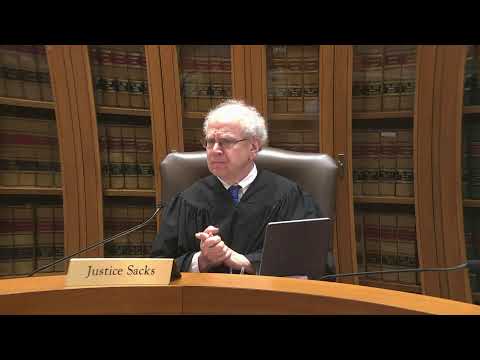
Panel reaction and law: The three‑judge panel repeatedly pressed both sides on the standard of review (abuse of discretion) and how to apply the Pless test’s familiarity inquiry. The justices probed distinctions with recent decisions — including a partially favorable/unfavorable decision the panel identified as Bell Nevis — and queried whether limited contact or masking in video undercut helpfulness to a fact finder. The court also asked defense counsel whether the judge’s on‑the‑record questioning and the stipulation on CSLI preserved the issue for appeal.
No ruling was issued during the session; the court moved to its next scheduled matter after oral argument concluded. The panel’s future decision will determine whether the trial court’s balancing of witness familiarity, video quality and the CSLI evidence was within its discretion.