Get Full Government Meeting Transcripts, Videos, & Alerts Forever!
Alamogordo leaders review preliminary FY2026 budget with water-rate increases, landfill and dispatch changes on deck
Summary
Finance Director Evelyn Huff presented a preliminary FY2026 budget on May 6 proposing $69.9 million in revenues and $64.9 million in expenditures across city funds; commissioners were asked to consider preliminary adoption May 27 and staff flagged next steps on water-rate implementation, landfill cell development and a dispatch transition.
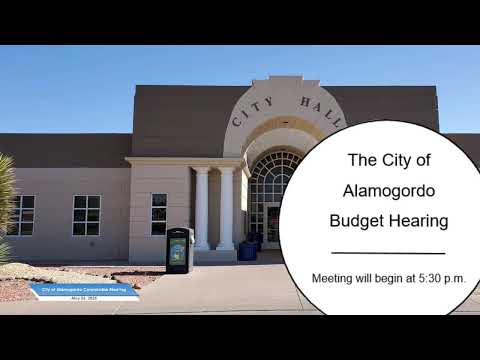
Alamogordo — The City Commission on May 6 heard a presentation on the preliminary fiscal year 2026 budget that projects $69.9 million in revenues and $64.9 million in expenditures across city funds and asks the commission to consider preliminary adoption at its May 27 meeting, Finance Director Evelyn Huff said.
The presentation pulled together the city’s operating and capital plans and highlighted near-term decisions that will affect utility customers, public safety and capital projects. Huff told commissioners, “I think we have a budget that truly represents something that's gonna affect our citizens and that we can be proud of.”
Why it matters: the budget drives tax, fee and utility-rate decisions that affect households and businesses, funds police, fire and public works operations, and supports multi‑year capital programs such as the year‑out energy efficiency contract and ongoing water and sewer projects. The city must submit a preliminary budget to the New Mexico Department of Finance and Administration (DFA) and meet statutory deadlines later this summer.
Major financial picture: Huff reported the city began FY2025 with roughly $94 million in cash and is carrying a number of large, mostly one‑time projects into 2026. For FY2026 the administration proposed $69.9 million in revenues, $23.4 million in transfers and $64.9 million in expenditures, leaving an estimated ending fund balance of about $61.2 million across all funds before adjustments. Huff noted reserves and debt coverage needs raised the city’s adjusted fund balance concerns in some enterprise funds.
Revenue assumptions and timing: the finance team used a three‑year average for gross receipts tax (GRT) receipts with no assumed growth and used a county collection rate of 97.75 percent for property‑tax estimates, Huff said. The city still expects to submit the preliminary budget to DFA;…
Already have an account? Log in
Subscribe to keep reading
Unlock the rest of this article — and every article on Citizen Portal.
- Unlimited articles
- AI-powered breakdowns of topics, speakers, decisions, and budgets
- Instant alerts when your location has a new meeting
- Follow topics and more locations
- 1,000 AI Insights / month, plus AI Chat