Get Full Government Meeting Transcripts, Videos, & Alerts Forever!
Get email alerts on the Criminal‑justice topic
No spam. Unsubscribe anytime.
House passes ‘Preston’s Law’ to strengthen penalties for group violence
Summary
The House approved HB 2611, known as Preston’s Law, which increases penalties for violent crimes committed by groups and expands investigative tools for law enforcement. Sponsors and family advocates addressed the chamber before the vote.
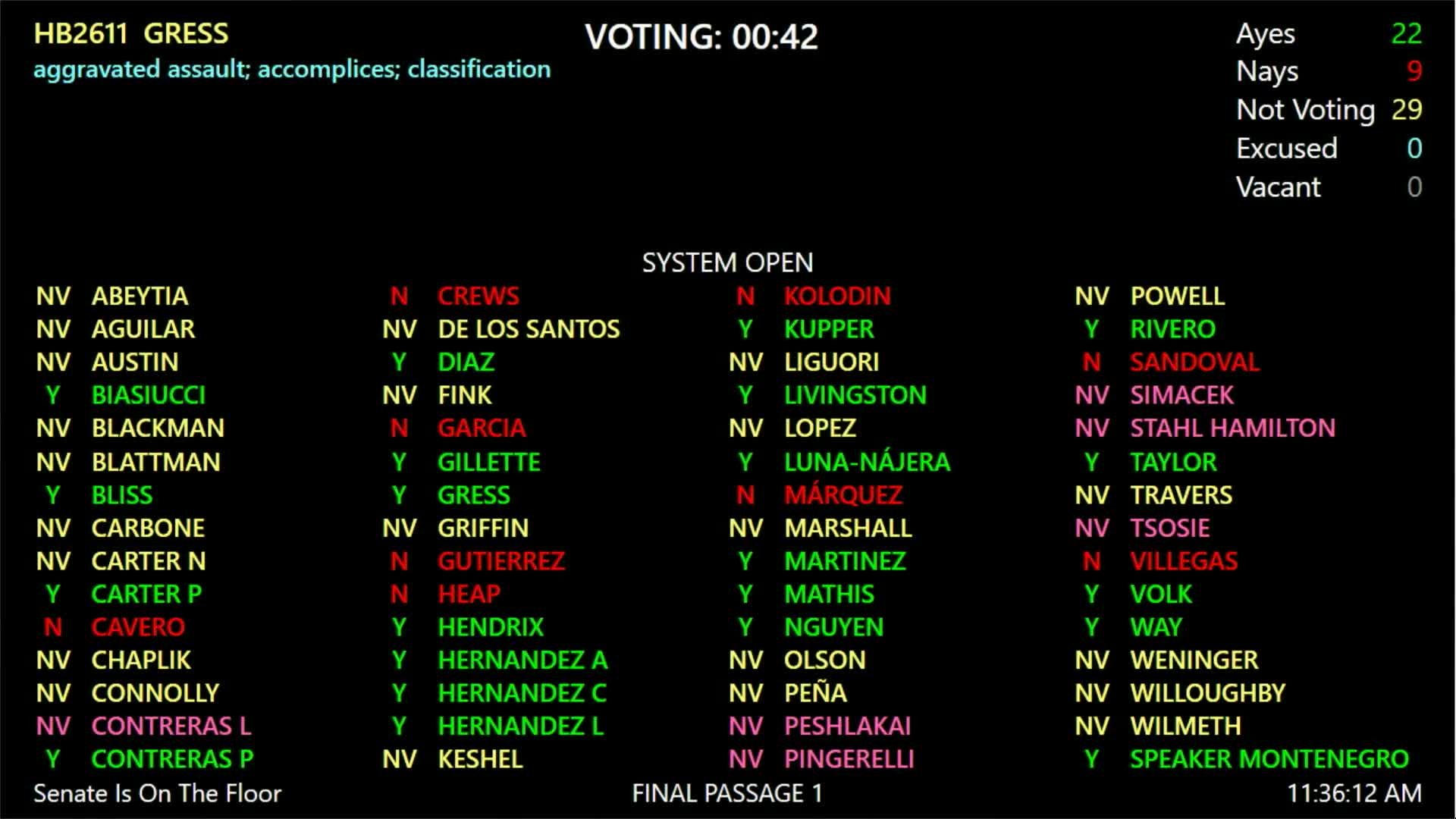
The Arizona House on Tuesday gave final passage to House Bill 2611, commonly referred to on the floor as “Preston’s Law,” which the sponsor described as strengthening penalties for violent group crimes and providing law enforcement with additional investigative tools.
State Representative Gress, the bill sponsor, invoked the name of Preston Lord and recognized family members and advocates in the gallery, saying the bill “is focused, clear, and deeply needed” to deter organized violent acts and aid investigations. “This bill bears the name of a young man, Preston Lord, whose life was tragically taken in an act of senseless violence,” Gress said.
Representative Aguilar spoke against the bill, noting potential unintended consequences for youth and school‑age incidents where students act impulsively; Aguilar said such outcomes made him vote no.
The clerk recorded final passage as 35 ayes, 19 nays, and 6 not voting. The clerk was instructed to record the action of the House and convey the bill to the governor.
Why it matters: The bill raises penalties and focuses enforcement tools on violence perpetrated by groups. Sponsor and victim advocates described it as a deterrent and accountability measure; opponents warned that the language may sweep in conduct by young people in some contexts.
What’s next: HB 2611 will be conveyed to the governor; advocates and opponents may monitor implementation and prosecutorial guidance to see how the new standards are applied.