Get Full Government Meeting Transcripts, Videos, & Alerts Forever!
Get email alerts on the Local‑government‑preemption topic
No spam. Unsubscribe anytime.
House approves measure limiting local discretion on public‑safety budgeting, opponents say it strips local control
Summary
House members passed HB 2221 on final reading after floor debate. Supporters argued it enforces spending priorities; opponents said it preempts locally elected officials and could harm municipal services. Several police unions opposed the proposal, according to floor remarks.
The Arizona House approved House Bill 2221 on final reading after a contested floor debate in which opponents said the measure strips authority from local governments to set budgets for public safety and other services.
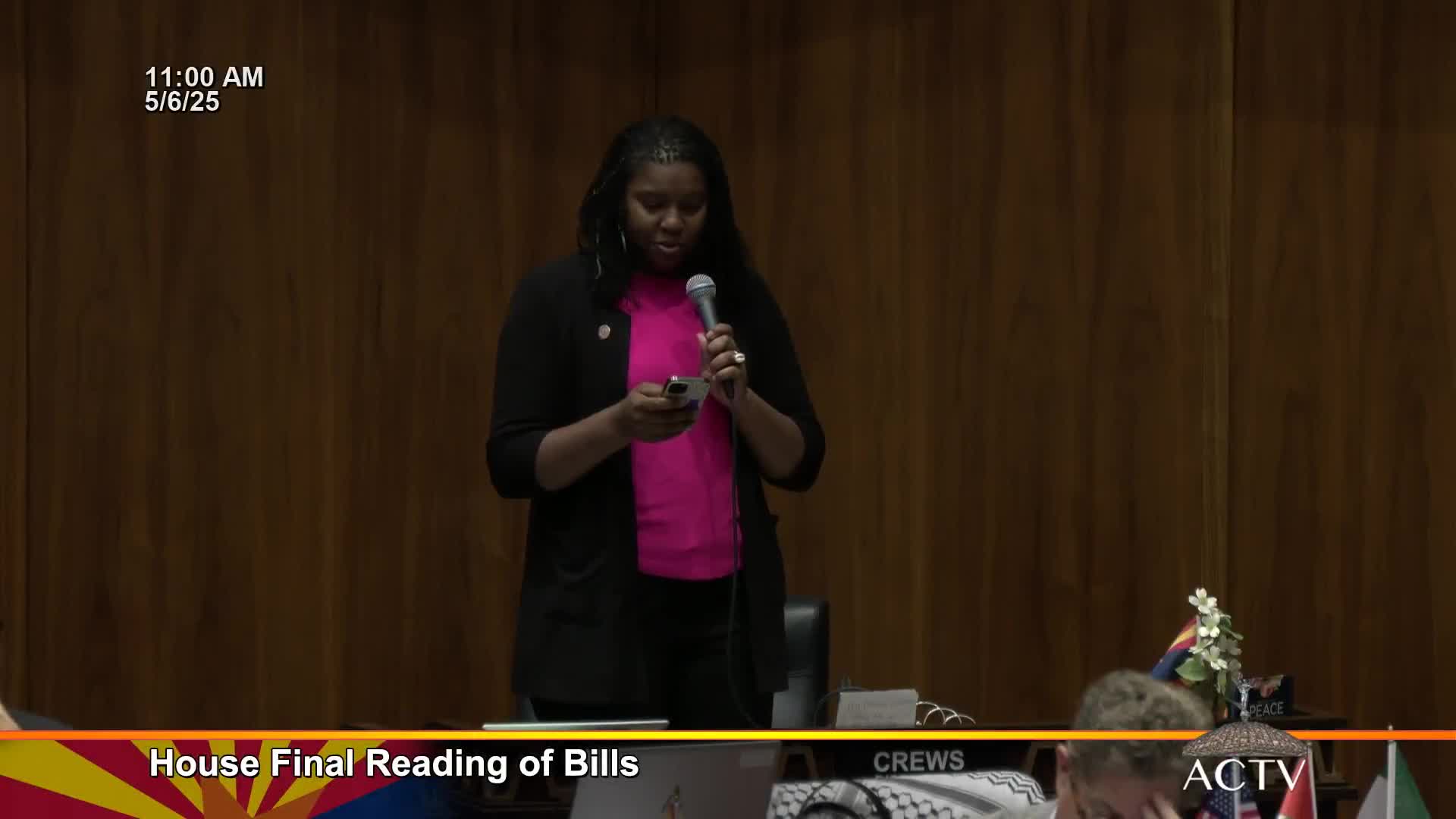
Representative Cruz argued against the bill, saying “HB 2221 strips authority from local governments, the very leaders elected by their communities to make smart, responsive decisions,” and told colleagues that police unions including the Fraternal Order of Police, CLEAA and the Arizona Police Association opposed the bill’s preemption language.
Representative Volk and Representative Austin also explained votes against the measure, saying local governments should decide spending priorities. Representative Wenninger, who supported the bill, said it holds municipal leaders to account and protects funding for police and fire in local budgets.
The clerk recorded final passage as 34 ayes and 22 nays. The House signed the bill in open session and the clerk was instructed to convey the bill to the governor.
Why it matters: HB 2221 affects the balance of authority between state and local governments over budgeting priorities tied to public safety. Supporters said the bill ensures municipal budgets prioritize public safety; opponents said the measure preempts local decision‑making and could hamper other local services.
What to watch: If enacted, the bill could require changes to municipal budgeting practices and generate local government-level responses or legal questions about preemption and local control.