Get Full Government Meeting Transcripts, Videos, & Alerts Forever!
Get email alerts on the Ordinance Amendments topic
No spam. Unsubscribe anytime.
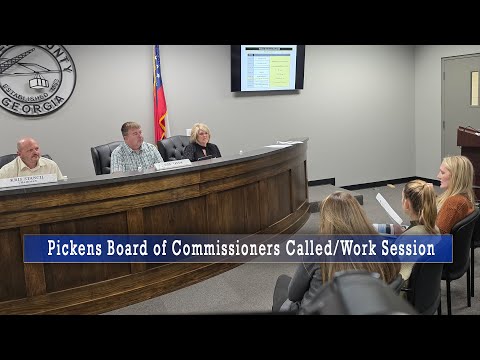
Pickens County commissioners adopt broad amendments to five code chapters, including sign rules and on-site wastewater limits
Summary
Pickens County commissioners voted unanimously to approve amendments to five chapters of the county code covering general provisions, advertising and signs, building regulations, businesses and health and sanitation.
Pickens County commissioners voted unanimously to approve amendments to five chapters of the county code covering general provisions, advertising and signs, building regulations, businesses and health and sanitation.
The measures, presented by staff during a public hearing and carried in subsequent motions, revise definitions and enforcement procedures across the code and add substantive changes in multiple chapters, including new location and spacing rules for freestanding commercial signs and a ban on privately owned on‑site wastewater systems that serve more than one parcel in residential settings.
County staff described the package as two linked efforts: substantive changes to land‑use and sign rules and a consistent, countywide modernization of administration and enforcement. Bill, a county staff member who led the presentation, said the goal was to “promote, preserve, and to enhance . . . unincorporated Pickens County safety, well‑being of the citizens and visitors, quality of life” and to create a uniform enforcement process across chapters.
On signs (Chapter 4), staff said the code now narrows the freestanding sign rules to certain commercial zoning categories and to state highways, requires 300 feet of separation between freestanding signs, and a 50‑foot clearance from structures. The county also reduced the allowed size of individual residential signs to 5 square feet while retaining a 25‑square‑foot aggregate limit per yard, increased the allowed number of flagpoles from two to three, and prohibited new signs mounted to fences going forward (existing signs are grandfathered).
On enforcement and administration (Chapter 1 and across chapters), staff explained the revisions provide consistent definitions of violations and persons liable, set maximum penalties and procedures for continuing violations, and clarify the county’s authority to pursue administrative remedies such as stop work orders and, where legally available, injunctions or prosecution. “We’re not trying to generate revenue by opposing fines,” Bill said; staff emphasized fines are a deterrent rather than a revenue source.
The health and sanitation amendment (Chapter 34) includes a targeted provision stating that “all future privately owned on‑site wastewater treatment disposal facilities in a residential setting, irrespective of capacity, which serve more than 1 parcel, lot, dwelling, and or dwelling unit shall not be permitted within Pickens County.” Staff said the language references existing division rules for on‑site wastewater construction and operation and adds definitions needed to implement the restriction.
Commissioners approved each amended chapter after the public‑hearing portion concluded; motions to adopt the ordinances were moved, seconded and recorded as carried with no opposition. Staff indicated additional ordinance items — including land development standards and land‑use intensity maps — will return to the commission at future meetings for more detailed review.