Get Full Government Meeting Transcripts, Videos, & Alerts Forever!
Get email alerts on the Recovery Court topic
No spam. Unsubscribe anytime.
Burke County commissioners weigh extension of recovery court funding; program leaders urge continuation
Summary
County staff recommended extending opioid-settlement funding for Burke County Recovery Court through December 2026; vendors, a recent graduate and local judges described program outcomes and urged continued support.
Burke County leaders were presented with data and personal testimony on a recovery court program that county staff say could be funded through opioid-settlement dollars through December 2026.
The county manager’s office said the vendor Cognitive Connections has reported 19 active participants as of April, 16 graduates since 2022 and a 12‑month success (graduation) rate of 57 percent. Hugh Sandow, budget strategy and performance analyst, told commissioners the program’s graduation rate is higher than national averages and that program graduates report large increases in stable housing and employment after completion.
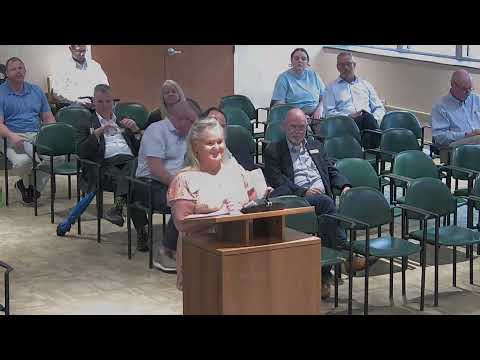
A graduate, Chris Ostott, told the board he spent about 20 years in active addiction and credited the program with saving his life. “Without this program, I wouldn’t be standing here today,” Ostott said. He described now working with local recovery courts as a peer and urged continued funding so others can access the same services.
Judge Robert Mullenax and other judicial leaders described the court’s structure: alternating‑Tuesday sessions with graduated levels of treatment, regular drug screening, counseling and supports for housing and employment. Mullenax called the recovery court “a shining star” in the local judicial system and invited commissioners to observe sessions.
County staff said Cognitive Connections provides monthly reports tracking participants, services and graduations. Sandow told commissioners the county had previously funded the program with a Bureau of Justice Assistance grant; when a subsequent federal renewal was not approved, the county moved opioid settlement dollars to continue services to avoid interrupting participant care.
The board did not take an immediate final vote to adopt an extension at the pre‑agenda meeting. Staff recommended placing the item on the consent agenda for the regular meeting so the board could consider a resolution to extend opioid‑settlement funding through December 2026 and continue data collection and outreach for alternative funding sources. No formal adoption of the extension occurred at the pre‑agenda session.
Why it matters: Commissioners were shown program metrics and first‑hand testimony that county staff say demonstrate the recovery court’s local outcomes; extending funding would keep the vendor‑operated program running while staff pursue sustainable funding alternatives.
Discussion versus action: The presentation was primarily informational and persuasive; commissioners expressed strong support and asked questions about program metrics, staffing and peer support. The formal decision to extend funding was deferred to the consent agenda at the board’s regular meeting.