Get Full Government Meeting Transcripts, Videos, & Alerts Forever!
Get email alerts on the Department Head Confirmation topic
No spam. Unsubscribe anytime.
Walton County commissioners ask staff to draft ordinance clarifying selection and confirmation of department heads
Summary
At an April 22 workshop in South Walton, commissioners directed staff to draft an ordinance or administrative code to define how department heads are selected and whether the board will confirm hires; no ordinance was adopted at the workshop.
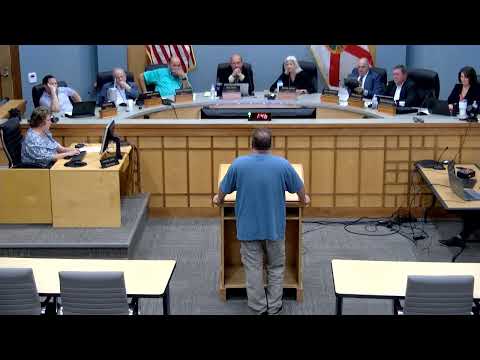
Walton County commissioners on Tuesday, April 22, directed county staff to draft an ordinance or administrative code that would clarify how the county selects and (if adopted) confirms department heads and define the separation of powers between the board and county administration. The discussion took place at a workshop at the South Walton Annex; the board did not take a formal vote to adopt an ordinance.
The draft ordinance would respond to years of precedent-based practice and recent confusion over whether Part 3 of Chapter 125 of the Florida Statutes (the County Administration Act of 1974) applies to Walton County. Legal counsel told the board that adopting the statutory part would require adopting it in full, while the board could instead craft a home-rule ordinance or administrative code tailored to local needs.
Commissioners framed the issue as one of continuity and good governance. Commissioner Gladwell said Walton County is “remarkably low on ordinances controlling county government” and urged a broad administrative code rather than piecemeal fixes. Commissioner Anderson and others said any ordinance should avoid micromanaging day-to-day operations. Commissioner Curry argued that confirmation should occur before an offer of employment—“you confirm somebody before we offer them a job”—and worried that post-hire confirmations could upend hires. Commissioner Drake expressed concern about mission creep and over-engagement by the board.
County staff described two workable approaches: adopt Chapter 125, Part 3, in full, or enact a locally drafted administrative code under the county’s home-rule authority. Staff noted examples from other counties (including an Okaloosa County ordinance that closely followed statutory language while adding board-adopted policy language) and recommended bringing back draft language and several practical options for the board to review.
County Administrator Stan (first name used in the workshop) told commissioners he would provide feedback when staff presents a concrete draft, and pledged to execute board policy regardless of his personal views: “You make the policy. I execute it. I enforce it regardless of what I think about it.”
Members of the public who spoke at the workshop urged the board either to adopt the statutory confirmation process or to adopt a clear local ordinance. One public commenter, identified as Miss Marrano, said of the statutory language, “’shall’ in the legal sense typically means mandatory,” and urged the board to adopt a firm process so department heads—she noted there are 17 department-head positions—are vetted by the elected commission. Other members of the public warned that any confirmation process should be structured to avoid politicization and suggested inclusive hiring panels and clear written job descriptions.
Instead of voting on an ordinance, commissioners gave staff direction: county staff were asked to research model ordinances and administrative codes used in similar counties, draft options that avoid day-to-day micromanagement while defining roles and confirmation thresholds, and return to the board with proposed language. Staff asked for authority to work with the chair to fast-track a draft and to return with options for a follow-up workshop within roughly 30 days; the board agreed to that approach during the workshop.
The workshop record includes references to past board action: commissioners noted a prior 3–2 vote at an earlier meeting that suspended adherence to any confirmation provisions under the County Administration Act; several commissioners and members of the public said that history contributed to the present confusion.
What happens next: staff will prepare draft ordinance(s) or administrative-code language reflecting several options—from adopting Chapter 125 Part 3 wholesale to a customized home-rule administrative code—and bring them back to the board for review and a public hearing process before any adoption. No ordinance was adopted at the April 22 workshop.