Get Full Government Meeting Transcripts, Videos, & Alerts Forever!
Get email alerts on the Jars Cove Plat topic
No spam. Unsubscribe anytime.
TRC continues Jars Cove final plat after mosquito‑control and stormwater drainage concerns
Summary
The Jars Cove final plat (8 lots) was continued to the May 7 TRC after staff and mosquito‑control raised unresolved issues about storm drains, wetlands and whether constructed storm infrastructure matches approved plans; staff directed an on‑site meeting and an engineering check before further action.
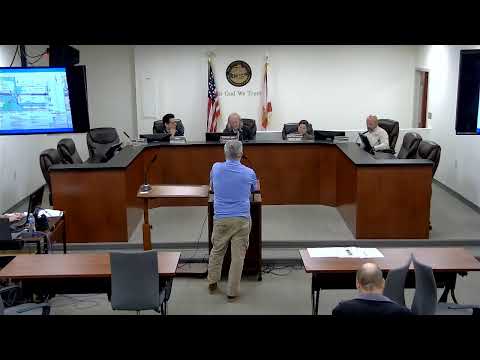
Walton County—s Technical Review Committee on April 16 continued the Jars Cove final plat to the May 7 TRC after mosquito‑control and staff raised concerns that some on‑site storm drains and downstream wetlands were not functioning as designed.
County staff introduced the plat as PLA‑204‑000052, consistent with a previously issued development order (MIN20‑000006) from May 24, 2022; the application proposes an 8‑lot subdivision on about 5.6 acres in the neighborhood‑infill zoning district. Staff reported outstanding comments from the county surveyor, engineering, environmental review and planning; staff also said the plat review had stalled while developers and mosquito control resolved operational concerns.
Mosquito‑control and county technicians told the committee that existing storm drains feeding the retention system were remaining full and not draining as intended; the county—s Development Order inspector and mosquito-control representatives described the drains as a recurring treatment hotspot. An attendee said a third‑party engineer had suggested the stormwater pond requires resizing because impervious areas were not previously accounted for in the design and construction, and because northern lots border wetlands. The developer—s representative said prior as‑built documentation indicates the system was designed as a bubble‑up hydraulic system and that the design and construction matched the approved plans. The county chair said staff needed to verify whether the built infrastructure matches the approved development order and whether any operational issues remain.
Because state law now allows building permits following preliminary plat approval under certain circumstances, staff said they were not comfortable advancing to preliminary plat approval without resolving drainage and mosquito nuisance concerns. The TRC directed engineering, the Development Order inspector and the applicant to meet on‑site within a week to define a finite list of any corrections needed; if no issues are found, staff said the matter could move forward.
After that meeting is completed, the applicant was directed to resubmit corrected materials in EnerGov/InterGov; county staff will review outstanding technical comments before returning the plat to TRC. The committee voted to continue the plat to the May 7 TRC and to coordinate an on‑site meeting in the interim.
Why it matters: Final plat approval permits division of land and can allow lot sales and building permits; unresolved stormwater and wetland issues can create long‑term maintenance, mosquito‑control and liability problems for future HOAs and residents.