Get Full Government Meeting Transcripts, Videos, & Alerts Forever!
Get email alerts on the Student Discipline topic
No spam. Unsubscribe anytime.
Lewiston schools propose districtwide student code of conduct and multi‑year rollout to strengthen classroom management
Summary
District staff outlined a student code of conduct, data on behavior incidents and a phased plan to build teacher capacity and roll out consistent discipline protocols over the next three years, with administrators already using drafts of the guides.
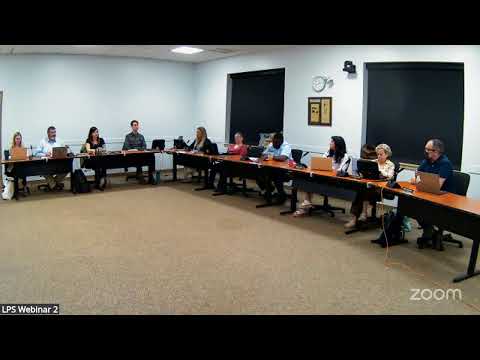
Steve Maroon, the district’s continuous school improvement coordinator, told the school committee Monday that a discipline committee developed three code‑of‑conduct guides for administrators, staff and families and proposed a phased implementation to improve consistency across schools.
Maroon said the committee’s work followed a comprehensive needs assessment that found inconsistent incident reporting, unclear boundaries between classroom‑managed and office‑managed behaviors, and disparities across student subgroups. “The largest location is within the classroom. So you’re talking about 64% of all incidents are happening in the classroom,” he said, and noted repeat referrals concentrated in a small group: “there are 65 current students who have more than 15 discipline referrals so far this year.”
Why it matters: district staff framed the effort as two linked pillars — the student code of conduct to define expectations and consequences, and an SEL implementation team to equip teachers with trauma‑informed, restorative and Tier‑1 classroom strategies so staff can manage more behavior in the classroom.
The discipline committee presented three tailored guides with a shared foundation of expectations and a draft timeline that places sustained professional development and administrative training in 2025–26 and a target for full district implementation in 2027–28. Maroon said the committee spent roughly 60 hours researching and drafting the guides and focused this year on administrator training and feedback.
Committee members and staff emphasized both urgency and caution. Member Lawson and others asked for concrete examples of what will change day to day; staff described the work as clarifying “who is responding and when” and offering “menus” of restorative responses. Member Hurd said she supports the effort but urged faster results: she described families who have chosen to leave the district citing behavior concerns and asked whether implementation could move more quickly.
Sue Williams, who leads SEL implementation, said some professional‑development modules are drafted for 2025–26 and that buildings will adopt modules based on local readiness. Williams said administrators already have used the administrator guide in meetings this year and that some schools have started implementing elements earlier based on building needs.
The committee discussed related state‑level constraints, such as limits on suspensions for younger students and rules on restraint and seclusion. Jake Kling, the superintendent, said the district must follow legal requirements and that the administrative guide intentionally brings relevant policies and procedures together in one place for clarity.
No formal vote was requested or taken Monday. District leaders asked the committee for continued support for resources and for public awareness of the work; Superintendent Kling also urged voter support for the upcoming budget referendum to maintain program funding. Leaders said some implementation steps are already underway, especially administrative training and building‑level pilot work, while the multi‑year timeline reflects the time required to train staff and create consistent practice across a large district.